

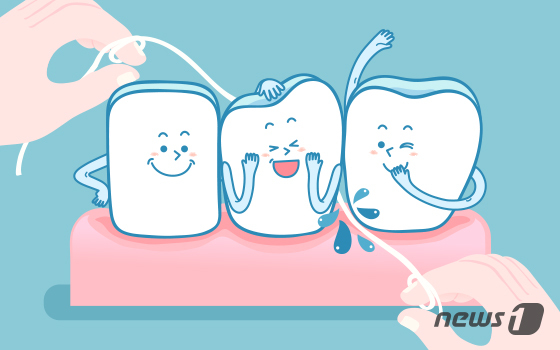
Contrary to the common belief that most patients visit clinics for colds, the number one outpatient diagnosis in South Korea in 2024 was gum disease. In recognition of Oral Health Day this Monday, we explore proper brushing techniques to prevent gum disease.
Gum Disease Is the Most Common Outpatient Condition—Neglect Can Lead to Tooth Loss
According to outpatient statistics from the Health Insurance Review and Assessment Service, 19.5 million people were treated for gum disease last year—about 2 million more than for the common cold. While it is especially prevalent among middle-aged and older adults, recent data indicate that individuals in their 30s and 40s now account for around 30 percent of patients, suggesting a rising incidence among younger people.
Gum disease, commonly known as periodontal disease, affects the tissues surrounding the teeth, such as the gums, periodontal ligaments, and alveolar bone. It typically begins as simple gum inflammation, but if left untreated, it can damage the bone supporting the teeth and even lead to tooth loss.
Depending on its severity, periodontal disease is classified into two main categories: gingivitis and periodontitis. Gingivitis is a milder form of gum disease where inflammation is limited to the gums and can heal relatively quickly. Symptoms may include swelling and bleeding. When the inflammation extends to the bone and surrounding tissues, it becomes periodontitis, which can cause persistent bad breath, pus discharge, and pain when chewing.
Neglecting proper brushing or regular professional dental cleanings (scaling) increases the risk of developing periodontal disease, primarily due to plaque—a bacterial film that forms on teeth. Plaque results from the combination of oral bacteria and food debris. If not properly removed, it hardens into tartar, triggering gum inflammation. Other aggravating factors include hypertension, diabetes, pregnancy, smoking, and nutritional deficiencies.
Focus on the Gumline and Between Teeth When Brushing… Get Regular Checkups and Scaling
Experts emphasize that the simplest, yet most effective way to prevent periodontal disease is proper tooth brushing. No matter how frequently you brush, if your technique is incorrect, plaque will remain and contribute to the development of gum disease. Therefore, careful brushing is crucial.
Plaque that causes gum disease tends to accumulate between the teeth and along the gumline. It is essential to focus on these two areas when brushing your teeth. The Korean Dental Health Association recommends the modified Bass technique as an effective method for brushing to prevent gum disease.
First, hold your toothbrush gently like a pencil and place the bristles at a 45-degree angle to the gumline. Vibrate the brush gently in place 5 to 10 times, then sweep it from the gums toward the teeth using your wrist.
Using dental floss, interdental brushes, and oral irrigators in conjunction with brushing is also effective for preventing gum disease. Oral irrigators use a high-pressure water stream to clean between teeth and along the gumline, areas that brushes often miss. They are particularly beneficial for people with braces or dental implants, which make brushing more difficult.
Park Yong Deok, president of the Korean Dental Health Association, advised that brushing should begin within one minute after eating and last for at least two minutes each time. He recommended brushing three times a day—once after each meal—as a basic habit for preventing gum disease.
Experts also stress the importance of establishing a habit of regular dental checkups. Kwon So Yeon, a professor of dentistry at Incheon St. Mary’s Hospital of the Catholic University of Korea, noted that once periodontal disease progresses, it is difficult to cure. She emphasized the need for prevention and continuous management through regular checkups and scaling to remove plaque and tartar.