Nvidia has entered the field of new drug development in partnership with Eli Lilly, signaling a broader implementation of artificial intelligence (AI) in the pharmaceutical industry. This move is expected to spark a significant shift in the biotech sector.
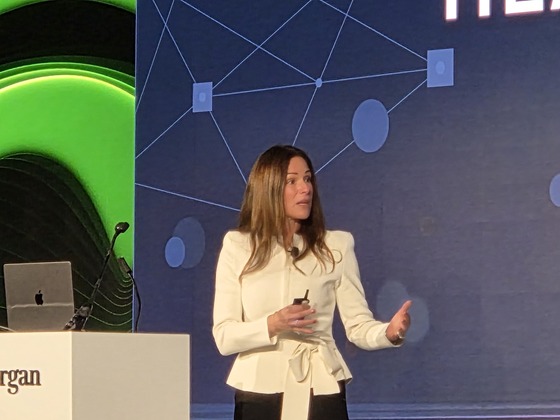
At the 44th JP Morgan Healthcare Conference held at The Westin St. Francis in San Francisco on Monday, Kimberly Powell, Nvidia’s Vice President of Healthcare and Life Sciences, declared that the AI revolution in drug development is already in full swing.
Nvidia recently announced a collaboration with Lilly, involving a joint investment of up to 1 billion USD over five years to establish an AI drug development research center in the San Francisco Bay Area.
This center will leverage Nvidia’s cutting-edge AI chip, the Vera Rubin, to expand Lilly’s Nvidia DGX supercomputing capabilities and AI infrastructure.
Lilly is incorporating AI models into its drug development process to accelerate time-to-market for new medications. Last year, the company reported building a supercomputer using over 1,000 of Nvidia’s Grace Blackwell chips.
Nvidia aims to integrate its AI technology into the life sciences sector to create its own drug development platform. The company is pursuing a strategy of providing open-source AI models and software, with this Lilly partnership marking a significant expansion of its reach.
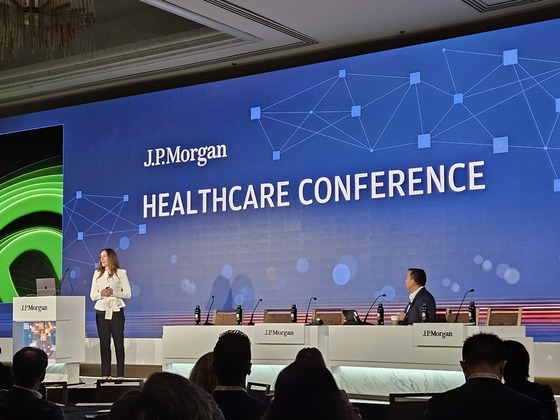
Powell emphasized that AI is revolutionizing laboratory efficiency and experimental quality. They’re at a tipping point where AI agents could dramatically accelerate scientific progress. Lilly’s enhanced use of physical AI in labs and manufacturing could lead to groundbreaking advancements.
She added that the newly developed AI scientist Edison can work tirelessly for 16 hours, analyzing 1,500 papers and generating 40,000 lines of code to synthesize research reports. AI will boost both the quantity and quality of lab data processing, enhancing experimental accuracy and eliminating human-caused bottlenecks.
Other Big Pharma Companies Also Emphasize AI… Announcements From South Korean Companies Draw Attention
Beyond Nvidia, other major pharmaceutical players like Pfizer and Bristol Myers Squibb (BMS) are also planning to expand their AI initiatives.
During the main track presentation, BMS Chief Executive Officer (CEO) Chris Boerner announced plans to further integrate AI this year to boost research and development (R&D) efficiency.
Novartis CEO Vas Narasimhan stated that AI has become an indispensable tool for target optimization.
On Tuesday, Samsung Biologics and Celltrion are set to take the main stage, with both companies expected to present substantial information about their AI utilization strategies.