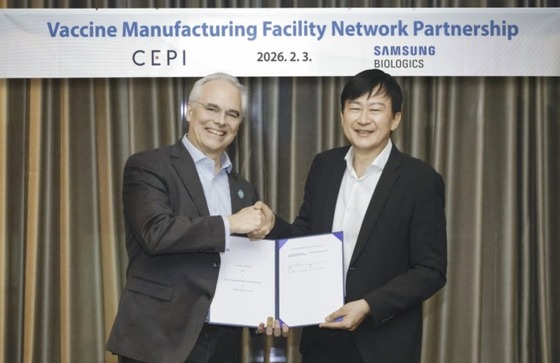
Samsung Biologics has inked a partnership deal with the Coalition for Epidemic Preparedness Innovations (CEPI) to join the Vaccine Manufacturing Facility Network (VMFN). This collaboration aligns with Samsung Biologics’ commitment to realizing its corporate philosophy of business for the nation by contributing to society through its operations.
Industry sources revealed on Thursday that CEPI, a global alliance established at the 2017 Davos Forum, brings together governments from over 30 countries, including South Korea, along with major pharmaceutical and biotech firms. Their collective mission is to develop vaccines in anticipation of future infectious disease outbreaks.
By becoming part of the vaccine manufacturing facility network, Samsung Biologics aims to work closely with CEPI to ensure swift vaccine distribution worldwide during pandemic situations, thereby bolstering global health security.
The company is poised to cement its position as a leader in global health security by facilitating rapid vaccine supply not just in South Korea, but across the globe.
Drawing on its world-class biopharmaceutical production capabilities, Samsung Biologics is dedicated to creating a robust pharmaceutical supply chain and enhancing South Korea’s health security measures. During the early days of the COVID-19 pandemic, when vaccine availability was limited domestically, the company played a pivotal role. In 2021, it collaborated with government agencies to produce and distribute South Korea’s first mRNA COVID-19 vaccine from Moderna, a significant step towards vaccine independence.
Remarkably, the company managed to deliver vaccines just five months after signing a contract manufacturing organization (CMO) agreement, supporting South Korea’s swift COVID-19 recovery and its emergence as a vaccine production hub.
Efforts to Boost Community Growth Are Also in Full Swing
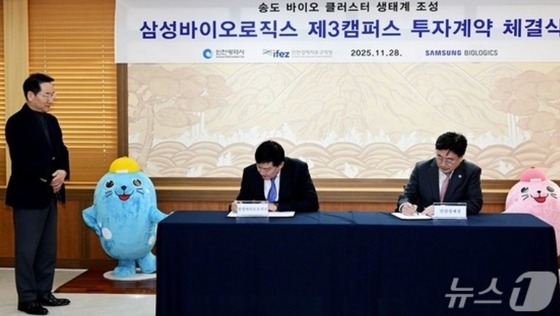
Samsung Biologics is also focusing on nurturing the domestic biotech industry and fostering community development. In 2022, during negotiations for its second bio campus, the company proposed establishing an open innovation center to support biotech startups, set to launch in 2027.
Through this innovation hub, Samsung Biologics plans to foster partnerships with promising biotech firms and actively pursue next-generation technologies and new business opportunities.
The company is also doubling down on research and development (R&D). As a trailblazer in Incheon, it has set up a 25 billion KRW (about 17.1 million USD) industrial development fund to support local biotech researchers and startups. This fund will be gradually deployed over the next three years, providing crucial support for research activities, technology development, and infrastructure for local biotech researchers, startups, and venture companies.
In addition, the company is planning to implement follow-up support programs for research outcomes.
An industry expert praised the company’s efforts, stating that Samsung Biologics is driving community growth by creating jobs that invigorate the local economy. More importantly, they’re going beyond just increasing employment numbers. By actively cultivating high-skilled talent in the biotech sector, a key industry of the future, they’re contributing to qualitative job growth both in the local community and the national economy.