In the recent Japanese House of Representatives election, Prime Minister Sanae Takaichi secured a decisive victory. An American expert on Japan predicts that this election outcome will have a positive impact on Japan-South Korea relations.
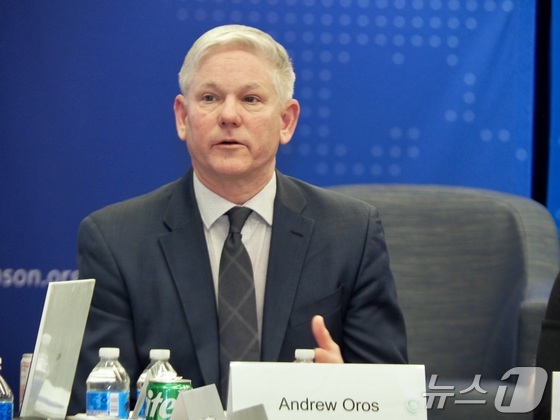
During a meeting with South Korean correspondents in Washington, D.C. on Monday, Andrew Oros, director of the Japan program at the Stimson Center, assessed the election results. He stated that this election has significantly bolstered the political leadership of the Japanese Prime Minister.
Oros said that although the early election involved substantial political risks, it ultimately proved successful. He added that Takaichi’s Liberal Democratic Party won two-thirds of the House seats on its own, which goes beyond simply increasing its representation and instead creates a structure that does not rely on coalition partners.
He argued that this situation enhances policy momentum and predictability in Japan and that the election results could positively influence Japan-South Korea relations.
Oros noted that while Japan’s nationalist right has not been fully reined in, it has been partly integrated into mainstream politics, which brings both benefits and drawbacks, including the risk of diplomatic friction and the possibility of more predictable cooperation.
He pointed out that, in this context, the election results could open the door to deeper cooperation between South Korea and Japan, and that it will also be important to watch the potential for trilateral cooperation among the United States, Japan, and South Korea.
Oros mentioned that President Trump’s public support for Takaichi before the election was a very rare move for a U.S. president and an unusual, significant event.
He noted that next month’s U.S.-Japan summit will show whether a strong personal relationship develops along the lines of Trump and Abe, or whether it is simply a fleeting interest for Trump.
Oros addressed concerns in South Korean society about Japan’s rearmament and the possibility of constitutional revision, saying that if the term “rearmament” is used, Japan has already made significant progress in that area.
On fears that Takaichi might push to revise the constitution to turn Japan into a country capable of waging war, he said it was possible but stressed that there are significant differences of opinion within Japan about the targets and direction of any such revisions. He added that if a national referendum were held, issues beyond security, including information disclosure and environmental concerns, could also come to the surface, and noted that while he understood the narrative is intriguing, he did not think it is being discussed in depth at the moment.
During the meeting, the potential relocation of U.S. troops in South Korea was also mentioned in the context of implementing the South Korea-U.S. alliance modernization strategy.
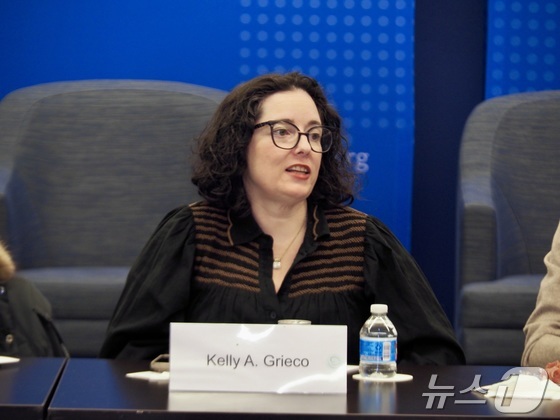
Kelly Grieco, a senior researcher at the Stimson Center focused on U.S. grand strategy, said that South Korea and Europe, often described as model allies in U.S. defense strategy, are nevertheless facing pressure to adjust troop levels. She added that, while it is surprising that South Korea-U.S. relations are going quite well, she sees a high likelihood of some form of troop reduction attempts, meaning a decrease in the U.S. military presence on the Korean Peninsula.
Grieco also said that when she speaks with Defense Department officials, they consistently emphasize the Army and its share of Army personnel within U.S. forces in South Korea, and she predicted that if troop relocation occurs, it would likely focus on adjusting heavy-equipment-centered Army capabilities.
Concerns arose about President Donald Trump’s plan to rebuild the shipbuilding industry through allied cooperation, with some expressing skepticism about its feasibility given political factors in the U.S.
Grieco said that when she discussed shipbuilding cooperation with allied countries, it made sense from a strategic perspective, but that in conversations with policymakers or industry figures, domestic political issues always surfaced.
She added that although the idea is strategically sound, it is unlikely to be realized because some senators will block it and others will do the same, given how deeply intertwined the interests are.
Christopher Preble, the director of U.S. grand strategy at the Stimson Center, highlighted that the Jones Act, which restricts shipping between U.S. ports to U.S.-built vessels, has not been repealed. He stated that the United States cannot build ships in the way Trump envisions, meaning only within the United States, because the country lacks the workforce to build ships.
Oros pointed out that while President Trump seeks short-term results, the current shipbuilding workforce in South Korea and Japan is nearing retirement and faces challenges in securing replacement workers.
Oros said that the next generation of shipbuilding will rely on robots rather than welders, adding that the United States has a narrow window of opportunity to succeed in this area and revive its shipbuilding industry.
He also said that if a real military conflict with China were to occur, the United States would not want to repair vessels in Northeast Asia and would instead prefer to build and repair them domestically, emphasizing that this is something both South Korea and Japan need to understand.