

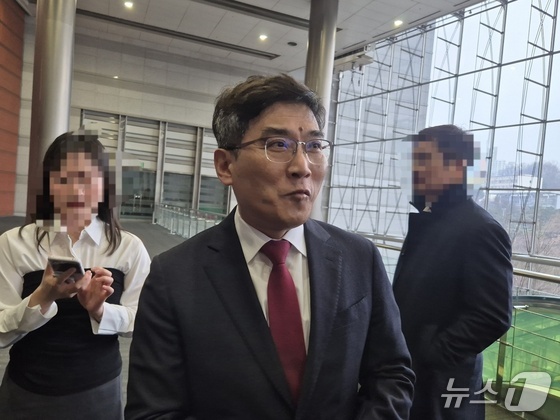
On Wednesday, Song Jae Hyuk, President and Chief Technology Officer (CTO) of Samsung Electronics’ Device Solutions (DS) division, announced that Samsung would be the first company globally to ship the sixth-generation high-bandwidth memory (HBM4), hailed as an artificial intelligence (AI) game changer. He said that the company was proud to once again demonstrate Samsung’s world-class technological prowess.
Speaking to reporters before his keynote address at Semicon Korea 2026 at COEX in Seoul’s Gangnam district, Song expressed confidence in HBM4’s performance, saying that customer response has been extremely positive. This suggests Samsung has regained a competitive edge strong enough to reclaim its position as a semiconductor industry leader.
Samsung Electronics has scheduled mass production shipments of HBM4 for the third week of February, immediately following the Lunar New Year holiday. This marks the first confirmed shipping timeline for HBM4.
Samsung’s HBM4 is regarded as the world’s best, surpassing standards set by the Joint Electron Device Engineering Council (JEDEC). It integrates 1c DRAM (6th generation 10nm) and 4nm foundry processes, achieving speeds up to 11.7 gigabits per second (Gbps).
This performance exceeds the JEDEC standard of 8 Gbps by 37% and outperforms the previous generation HBM3E (9.6 Gbps) by 22%. Moreover, the memory bandwidth for a single stack has increased 2.4x over its predecessor, reaching a maximum of 3 terabytes per second (TB/s), while offering up to 36 gigabytes (GB) of capacity with 12-layer stacking technology.
Song predicted that the semiconductor supercycle, driven by a robust market, will continue in the near term. He said that the memory supply shortage is likely to persist this year and next, adding that current AI demand differs from past demand for mobile or PC products because it is mainly driven by cloud service providers.
Song also said that Samsung Electronics’ strengths as the only integrated device manufacturer (IDM) come from its in-house capabilities in memory, foundry services, and packaging, which create an ideal environment for producing products demanded by AI and work together synergistically.
Regarding HBM4’s market share outlook, he stated that Samsung leads in technology and that portfolio management falls under business strategy.
Song repeatedly emphasized Samsung’s prowess in HBM technology.
When questioned about the supply timeline for HBM4E (7th generation) samples and the development status of HBM5 (8th generation), he was cautious, citing customer confidentiality. However, he said the company’s focus is on preparing for future technologies, adding that it continues to showcase cutting-edge innovations.