

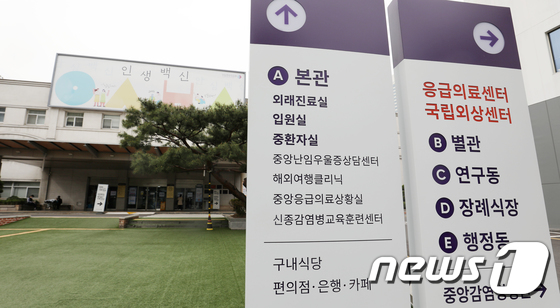
The Korea Disease Control and Prevention Agency (KDCA) announced that it will host the 2nd Lee Kun-hee International Symposium on Infectious Disease Research Capacity Enhancement (LISID) and the 4th International Symposium on Infectious Disease Research Institutions (IDRIC) over two days starting on March 26, in collaboration with the National Medical Center.
The event is jointly organized by the National Medical Center, the KDCA’s National Institute of Health, and the National Institute of Infectious Diseases, with the International Vaccine Institute (IVI) participating as a partner organization.
The LISID symposium is part of the Korea Infectious Disease Overcoming Support Project, funded by donations from the family of the late Samsung Chairman Lee. The Ministry of Health and Welfare, KDCA, and National Medical Center are collaborating on this initiative.
In April 2021, the Lee family donated a total of $465 million for projects aimed at combating infectious diseases. Of this amount, $332 million will be used to construct a central infectious disease hospital at the National Medical Center, $66 million will enhance the infrastructure of the National Institute of Infectious Diseases, and the remaining $66 million will support the Infectious Disease Research Capacity Enhancement Project.
This symposium will showcase key research findings from the Infectious Disease Research Capacity Enhancement Project and facilitate discussions on collaboration strategies to strengthen national infectious disease response capabilities among domestic and international researchers.
The 4th IDRIC, scheduled for the following day, aims to strengthen international collaboration and Korea’s role as a global hub by fostering cooperative systems among domestic and international research institutions.
During this symposium, participants will present and discuss the AI-based Rapid Response Technology Development Strategy for Infectious Diseases. This initiative is part of the government’s long-term plan to prepare for future pandemics by accelerating vaccine and treatment development.
Leading experts from academia, industry, and government will participate, including Dr. Jae Hwan Nam, Director of the National Institute of Health; Dr. Yeong Ki Jeong, Director of the National Institute of Infectious Diseases; and Dr. Hong Bin Kim, President of the Korean Society of Infectious Diseases. They will exchange cutting-edge insights and explore collaboration opportunities.
Dr. Gil Jun Seo, Director of the National Medical Center, said the institution is committed to establishing a central infectious disease hospital as a national hub for specialized treatment, research, and education. He added that the facility will play a critical role in building a sustainable system to proactively respond to future global health crises.
Kyung Sil Jeong, Director of Health and Medical Policy at the Ministry of Health and Welfare, emphasized that the government will continue to expand public health infrastructure with a focus on strengthening health security technologies. She added that the Lee family’s donation will be utilized as a strategic investment to enhance the nation’s capacity to respond to infectious diseases.
KDCA Commissioner Seung Kwan Lim said the agency aims to develop domestically produced vaccines and therapeutics to prepare for future pandemics. He added that it will continue to support research and development, including the establishment of advanced clinical research centers and the integration of AI-based technologies.