On Thursday, South Korea’s National Assembly’s Health and Welfare Committee convened to review the first supplementary budget bill for 2026.
The Ministry of Health and Welfare has proposed a 326.3 billion KRW (about 216 million USD) increase in this budget. The additional funds aim to support vulnerable groups, assist youth, and address healthcare needs in underserved areas.
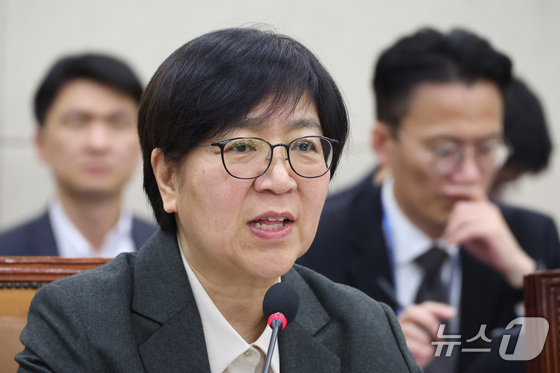
Health Minister Jeong Eun-kyeong explained that the budget increase is designed to ease the burden on vulnerable populations during times of high inflation and support economic recovery. She emphasized that the proposal reflects necessary measures in light of the current economic climate.
However, opposition lawmakers criticized the supplementary budget, arguing it has little connection to war response efforts. Rep. Kim Mi-ae of the People Power Party contended that youth employment support and expanded medical benefits are unrelated to the Middle East conflict. She warned that such spending could worsen inflation, ultimately hurting ordinary citizens.
The Free Essentials Support Project also faced criticism. Rep. Kim Ye-ji, also from the People Power Party, argued that simply increasing the number of distribution centers fails to address accessibility issues for vulnerable populations.
Minister Jeong defended the project, stating that it allows individuals to receive support without proving income or poverty status. She added that the ministry is exploring complementary measures, such as home delivery services, to reach those with limited access.
The youth employment initiative also came under scrutiny. Rep. Kim Nam-hee of the Democratic Party urged the government to work with relevant departments to ensure the eight-month program placing 629 young people as caregivers in social welfare facilities leads to long-term employment opportunities.
In response, Minister Jeong stated that the initiative aims to provide valuable work experience for youth while addressing workforce shortages. She committed to careful management to facilitate transitions to permanent positions.
The medical sector sparked further debate. Rep. Choi Bo-yun of the People Power Party criticized the 282.8 billion KRW (about 187 million USD) increase in the medical benefits budget, arguing that such predictable expenses due to an aging population should not be included in a supplementary budget.
Concerns were also raised about medical supply shortages. Rep. Han Ji-a highlighted the lack of funding to address supply instabilities for intravenous (IV) bags and syringes, criticizing the government’s inadequate response.
Minister Jeong assured lawmakers that her ministry is working closely with the Ministry of Trade, Industry and Resources and the Ministry of Food and Drug Safety to monitor supply chains. She pledged to implement additional measures if necessary.
The committee also discussed healthcare gaps in rural areas. Addressing concerns about staffing shortages at over 80% of rural health centers, Minister Jeong outlined plans to integrate regional health center operations and reform the primary healthcare system, including the potential use of telemedicine. She emphasized ongoing discussions with local governments to implement these changes.