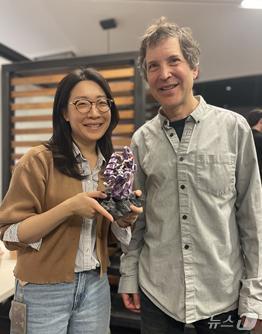
The Korea Advanced Institute of Science and Technology (KAIST) announced on Thursday that Professor Lee Kyu Ri from the Department of Life Sciences has successfully designed artificial proteins that selectively recognize specific compounds using artificial intelligence (AI). This breakthrough was achieved in collaboration with Professor David Baker from the University of Washington, a Nobel laureate in Chemistry. Professor Lee conducted the research as part of the AI-CRED Innovative Drug InnoCore research team.
The study’s significance lies in its novel approach of designing proteins from the ground up to recognize specific compounds and implementing them as functional biosensors.
Unlike previous methods that primarily focused on exploring natural proteins or modifying existing functions, this research used AI-based design to create custom proteins with desired functions and experimentally validated them.
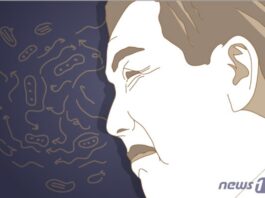
In a notable achievement, the researchers designed a protein that selectively recognizes cortisol, a stress hormone, and successfully developed a biosensor based on this AI-designed protein. This breakthrough addresses a long-standing challenge in protein design: recognizing small molecules.
The implications of this research are far-reaching, with potential applications in disease diagnosis, drug development, and environmental monitoring. The technology’s ability to precisely detect blood biomarkers could revolutionize early disease detection and contribute to the development of targeted therapies.
Moreover, the development of sensors capable of detecting environmental pollutants opens the possibility of real-time monitoring of air and water quality, paving the way for advanced, customized biosensor technologies.
The team has filed a provisional patent in the United States for their cortisol biosensor design technology, which utilizes inducible dimerization based on a novel cortisol-binding protein.
Professor Lee said the research provides experimental proof that proteins can be designed using AI to precisely recognize specific compounds. He added that the team plans to expand the technology for broader applications in medical diagnostics, pharmaceutical development, and environmental monitoring.
The groundbreaking research, with Professor Lee as the lead author and Professor David Baker as the corresponding author, has been published in the prestigious journal Nature Communications.
Professor Lee, who joined KAIST in February of last year, currently heads the Protein Design Laboratory. Her expertise stems from his work as a postdoctoral researcher and staff scientist in Professor Baker’s lab from 2018 to 2024.
In conjunction with Professor Baker’s visit to Korea, KAIST will host a lecture in the Fusion Hall of the KI Building on Friday. The talk will focus on cutting-edge trends in AI-based protein design and biomedical research.