

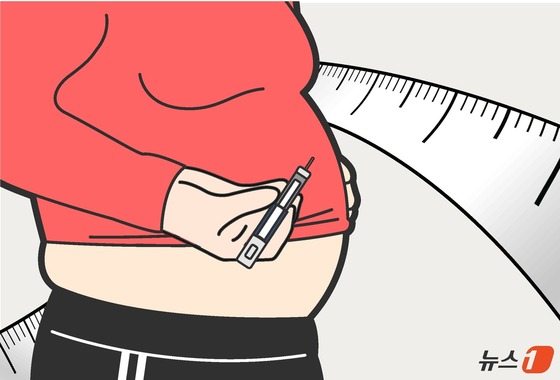
Prescriptions for the obesity treatment Mounjaro have increased more than tenfold within eight months of its launch, surpassing 200,000 cases per month for the first time. As prescriptions surge, concerns are growing that access for patients with obesity who require treatment may decline as demand expands to include normal-weight individuals seeking cosmetic purposes.
According to data submitted by the Health Insurance Review and Assessment Service to Rep. Seo Mi-hwa of the National Assembly’s Health and Welfare Committee on the 16th, the number of Mounjaro prescriptions in Asia last month totaled 228,199 cases.
This marks a 1,128% increase compared to 18,579 cases in August last year, the first month of its launch, setting a new monthly record.
Mounjaro prescriptions reached 582,945 cases in the first quarter of this year, while cumulative prescriptions totaled 977,310 cases as of last month since its launch. Combined with prescriptions for another GLP-1 obesity treatment, Wegovy, the cumulative total for the two drugs has surpassed 2 million cases.
As prescription volumes expand rapidly, the market is also growing sharply. Assuming a drug price of around $203, the monthly prescription volume for Mounjaro amounts to approximately $46.3 million. In the medical community, this pace of growth is considered unusual, given that the maximum annual sales for a single drug formulation had previously been around $47.3 million.
The issue is that this increase in prescriptions is drawing not only patients with obesity who have a high need for treatment but also demand from normal-weight individuals for cosmetic purposes. Obesity treatments are intended for patients with a body mass index (BMI) of 30 or higher, or 27 or higher with comorbidities, but it is known that there are a significant number of cases where prescriptions deviate from these criteria in practice.
Prescription concentration in specific regions has also been observed. Jongno District in Seoul had the highest share nationwide, accounting for 10.2% of Mounjaro prescriptions and 16.8% of Wegovy prescriptions. The area is often referred to as a “mecca for obesity treatments,” with a high density of clinics and pharmacies, fostering both price competition and accessibility. As both drugs are injectable and can be administered immediately within hospitals, demand has tended to concentrate in medical institutions where prescriptions are relatively easy to obtain, according to analysis.
From a safety perspective, reports of adverse events are also increasing. According to the Korea Institute of Drug Safety and Risk Management, adverse cases related to GLP-1 obesity treatments rose from 39 cases in January last year to 219 cases in December. Reported symptoms included gastrointestinal issues such as nausea, vomiting and diarrhea, as well as injection site pain and bleeding.
Rep. Seo said, “Obesity treatments are medications for disease treatment, not for cosmetic purposes,” adding, “If prescriptions are overused, it could lead to a situation where patients with obesity are unable to receive proper access to the medication.”