
Experts predict that the government’s overhaul of drug pricing will spark widespread structural changes in the pharmaceutical and biotech sectors. As the revenue model centered on generic drugs weakens, competition for innovation driven by research and development (R&D) is set to intensify, forcing companies to comprehensively reshape their strategies.
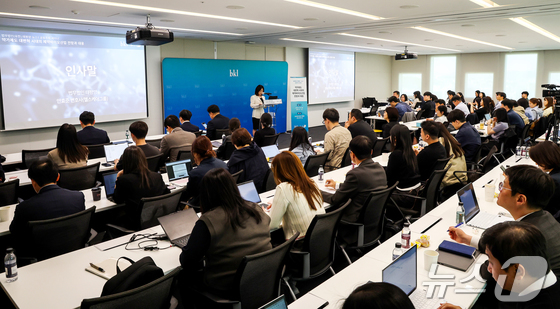
At a seminar titled, Drug Pricing Reform and the Future of the Pharmaceutical and Biotech Industry, held on April 24 at the Centropolis building in downtown Seoul, attorney Ahn Hyo-jun, representing Pacific Healthcare Group, stated that this reform plan signals significant structural shifts across the industry.
Lee Jae-guk, vice president of the Korea Pharmaceutical and Bio-Pharma Manufacturers Association, warned in his opening remarks that if revenue losses from drug price cuts lead to reduced R&D or facility investments, industry competitiveness will inevitably suffer. He emphasized the need for concrete measures to foster R&D for sustainable industry growth.
The first speaker, Cho Won-jun, policy director of the Democratic Party, asserted that the government aims to pivot the pharmaceutical and biotech industry from a focus on generics to one centered on innovation. Achieving innovative pharmaceutical company status is now a necessity, not an option.
Cho emphasized that strategies centered on a wide variety of generics will soon hit their limits, urging companies to restructure their portfolios with a focus on profitability.
To encourage ongoing R&D from innovative pharmaceutical companies, the government plans to tighten certification requirements. They will increase the required R&D expenditure ratio relative to pharmaceutical sales by 2 percentage points and establish a regulatory framework that accounts for the unique characteristics of foreign pharmaceutical companies.
Lim Kang-seop, director of the Ministry of Health and Welfare’s Pharmaceutical and Bio-Industry Division, stated that it expects over 100 companies to apply for innovative pharmaceutical company certification, adding that the review process will conclude by early to mid-January next year.
Lim also mentioned that they are developing certification and review criteria for quasi-innovative pharmaceutical companies, focusing on R&D expenditure ratios and disqualification reasons, noting that the public comment period will end on May 6.
Attorney Baek Ji-wook from the law firm Pacific emphasized that the drug price reform is not merely a price adjustment but a policy that overhauls the industry’s compensation system, urging companies to rethink their strategies.
Baek added that previously, the processes of approval, listing, and negotiation occurred sequentially, but in the future, all procedures might be compressed within 100 days, stressing that integrated responses across departments will be crucial.
Innovative Companies Must Gradually Reduce Their Reliance on Generics
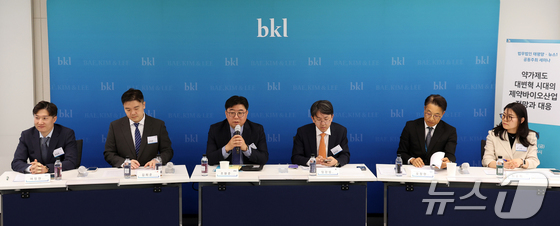
The subsequent discussion delved into more specific aspects of the government’s policy intentions and industry responses.
Lim reiterated the government’s fundamental stance: Profits from generics must be channeled into new drug R&D, emphasizing that innovative companies should progressively decrease their reliance on generics.
He continued that given the increased weight of open innovation evaluations, it urges both multinational and domestic companies to expand collaborative R&D and investments, and mentioned that they are considering expanding tax incentives for innovative companies, such as loss carryforwards.
Cho acknowledged the industry’s concerns but pointed out that the proliferation of contract sales organizations (CSOs) has reached levels difficult for the public to accept. He cautioned that while entry barriers may lower, exit standards could become more stringent, necessitating careful preparation.
Oh Chang-hyun, a senior advisor at Pacific, stated that pharmaceutical companies need to actively leverage the expanded financial inputs alongside drug cost reductions, expressing confidence that the government’s expedited approval and listing policies for new drugs will yield tangible results.
Choi Yoon-hee, a specialist at Pacific, noted that for the Health Insurance Review and Assessment Service to list new drugs within 100 days and set reimbursement criteria within a month, drugs, pharmaceutical companies, and academic societies must all be prepared, advising that companies should undertake significant preparation and effort moving forward.
Attorney Yeo Jeong-hyun discussed the need to clarify R&D ratio calculation criteria for innovative and quasi-innovative pharmaceutical companies, ensure consistency between certification status changes and special provision applications, and address the legal status of quasi-innovative pharmaceutical companies. Yeo added that since drug price increases are a significant benefit for innovative companies, further discussions are necessary.
The event featured presentations from Cho, Lim, Baek, and others who shared insights on government policy directions and the outlook for innovative company systems, while also proposing corporate response strategies. Approximately 150 stakeholders from the pharmaceutical and biotech industries attended the seminar.


