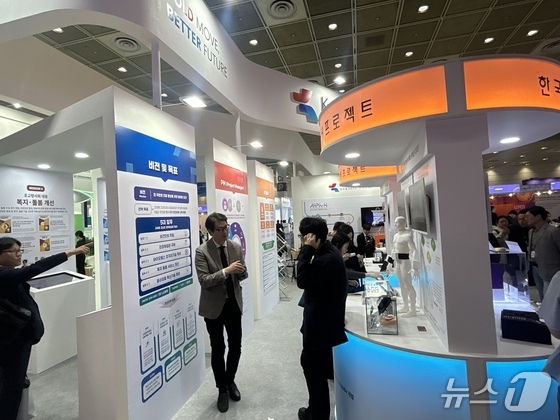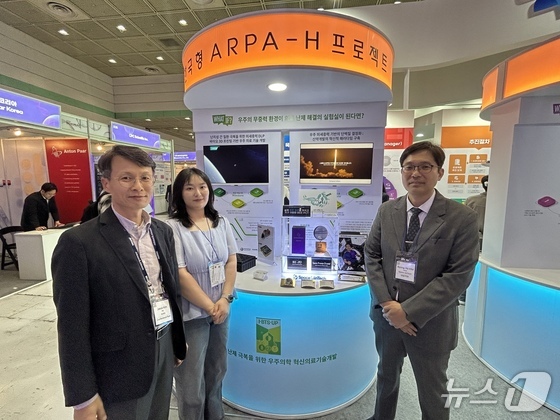
The microgravity environment in space has the potential to revolutionize how biopharmaceuticals form and function within the human body, offering new hope for patients battling cancer and rare diseases. It is on the cusp of an era where zero-gravity conditions could enable the creation of artificial organs and the production of groundbreaking vaccines.
Kim Jae-wook, Project Manager (PM) of the K-Health Future Promotion Team – often referred to as the Korean ARPA-H – has set his sights on conquering space-based medical challenges. His goal: to push beyond the limitations of Earth-bound precision bio-research.
The mission is to secure cutting-edge biohealth technologies, transforming space into a frontier laboratory for tackling medical enigmas, Kim emphasized.
Microgravity: A Game-Changer for Cell and Disease Research
Industry reports from Wednesday highlight microgravity as the primary draw of space environments. In the absence of Earth’s gravitational pull, cells and tissues exhibit dramatically different behaviors, opening new avenues for research.
At the Bio Korea 2026 event in Seoul’s Convention and Exhibition Center (COEX), PM Kim stressed the importance of this new frontier: To stay competitive globally, it must secure advanced biohealth technologies. Leveraging space as a novel research environment gives us a unique edge.
The exhibition showcased groundbreaking technology that utilizes bio three-dimensional (3D) printing to produce functional liver tissues in space – a potential game-changer for treating stubborn liver diseases.
Overseeing policy design, Kim explained that traditional bio R&D is a crowded field. Space-based research, still in its infancy, offers a chance to claim technological leadership through early investment.
Space LiinTech, a pioneer in space medicine, is spearheading on-site execution. The company recently announced a milestone: their proprietary space medical research module, BEE-PC1, successfully completed an automated protein crystallization experiment aboard the International Space Station (ISS) and has been safely retrieved.
This marks a historic first for a South Korean company, successfully conducting and completing protein crystallization experiments in the ISS’s unique microgravity environment. Space LiinTech’s BEE-PC1 display at the event drew significant attention.
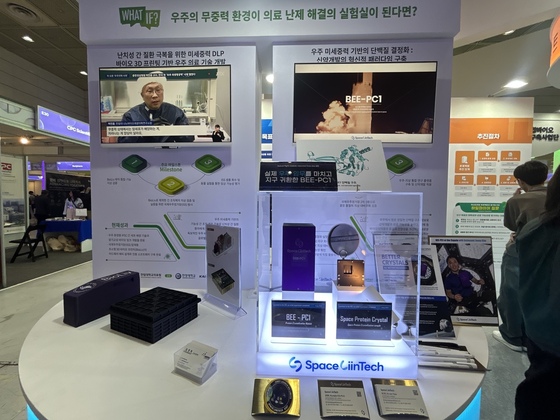
Space LiinTech executive Kim Byung-ho highlighted the unique challenges of space experimentation: It’s not just about research ideas. Hardware and operational tech are crucial. It’s designing experiments for extremely limited space and resources, making automation and miniaturization key. It’s a whole new ballgame compared to Earth-based research.
The ultimate goal, he continued, is to bridge space-derived data with terrestrial industries. They’re focusing on translating our findings into tangible results in drug development and biomaterials. There’s also work to be done on the regulatory front – ensuring proper safety measures, quality control, and approval processes for space-produced pharmaceuticals.
Space Biotech: A National Strategic Priority Requiring Academic-Industry Collaboration
While space biotechnology is still in its early stages, it’s generating buzz for its potential to unlock biological mysteries that have long eluded Earth-bound researchers.
Dr. Kim Kyung-hee from Hallym University’s Medical and Bio-Convergence Research Institute explained that microgravity fundamentally alters cell interactions and protein formations. This could revolutionize our understanding of disease mechanisms.
Dr. Kim emphasized that space research isn’t just an extension of current work, but a paradigm shift that demands new questions and robust infrastructure.
PM Kim echoed this sentiment, stating that they’re not chasing quick wins. The focus is on building long-term academic-industry partnerships and systematically accumulating data and validating technologies.