
A recent study has shown that high-dose selenium intravenous injections can mitigate exercise-related dysfunction, a common side effect that significantly impacts the daily lives of ovarian cancer patients undergoing chemotherapy.
On Tuesday, Seoul National University Hospital announced that a research team led by Professor Kim Hee-seung has demonstrated this finding. The team evaluated the preventive effects and safety of high-dose selenium against chemotherapy-induced peripheral neuropathy (CIPN) in patients with platinum-sensitive recurrent ovarian cancer.
Ovarian cancer is a malignant tumor that develops in a woman’s ovaries. It often goes undetected until it has significantly progressed due to its subtle early symptoms. The standard treatment typically involves surgery and chemotherapy, and the cancer is known for its high recurrence rate.
CIPN is a common side effect of chemotherapy, causing symptoms such as numbness in the extremities and muscle weakness. It affects approximately 70-80% of ovarian cancer patients and can severely impact mobility and daily activities as symptoms worsen.
These side effects are classified from grade 1 (mild) to grade 4 (severe). Grades 2 and above can significantly hinder independent daily living, including walking and using tools. Patients with platinum-sensitive recurrent ovarian cancer, who have already undergone chemotherapy and accumulated nerve damage, are particularly vulnerable to these side effects. Currently, there are no clear preventive measures available.
The research team focused on selenium, a key antioxidant in the body, noting its potential to neutralize reactive oxygen species generated during chemotherapy, thereby potentially reducing nerve damage.
To investigate this, the team conducted a phase 3, double-blind, randomized, placebo-controlled pilot clinical trial involving 68 patients with platinum-sensitive recurrent ovarian cancer.
Participants received either high-dose selenium (sodium selenate 2000 µg/40 mL) or a placebo via intravenous injection two hours before standard chemotherapy (paclitaxel, carboplatin, bevacizumab) over a total of six treatment cycles.
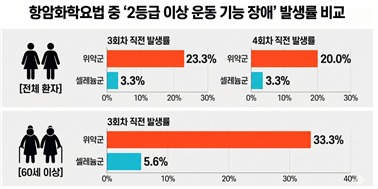
The results showed no significant differences between the two groups in the overall incidence of peripheral neuropathy of grade 1 or higher. However, the incidence of grade 2 or higher exercise-related dysfunction, which significantly impacts patients’ ability to live independently, decreased markedly in the selenium group.
Before the third treatment cycle, the incidence of grade 2 or higher exercise-related dysfunction was 23.3% in the placebo group compared to just 3.3% in the selenium group. Among patients aged 60 and older, the incidence at the same time point dropped from 33.3% in the placebo group to 5.6% in the selenium group, demonstrating even more pronounced effects.
The research team reported no significant toxicity associated with high-dose selenium intravenous administration. Furthermore, it did not affect progression-free survival or cancer-specific survival, indicating that it does not interfere with the existing anticancer effects.
However, the team acknowledged that they could not completely prevent mild sensory abnormalities, and the protective effect might be temporary.
Professor Kim Hee-seung stated that this study lays the groundwork for future large-scale research to verify the role of selenium in preventing motor nerve disorders. It could potentially alleviate the suffering of cancer patients over 60 during their chemotherapy process.
The findings of this study were published in a recent issue of the international journal BMC Medicine.