The global medical artificial intelligence (AI) market is rapidly expanding, and Neurophet, a company specializing in AI for brain diseases, is accelerating its efforts to penetrate the U.S. market. As the Alzheimer’s treatment market grows, the industry is focusing on Neurofit’s potential to become an essential platform company for the era of dementia treatment.
On Monday, industry sources reported that Neurofit received 510(k) (pre-market notification) approval from the U.S. Food and Drug Administration (FDA) for its brain imaging analysis solution, Neurophet AQUA AD Plus, which is related to Alzheimer’s treatment prescriptions.
This marks Neurophet’s third FDA approval, following its neurodegeneration imaging analysis software Neurophet AQUUA and PET imaging quantification software Neurophet Scale PET.
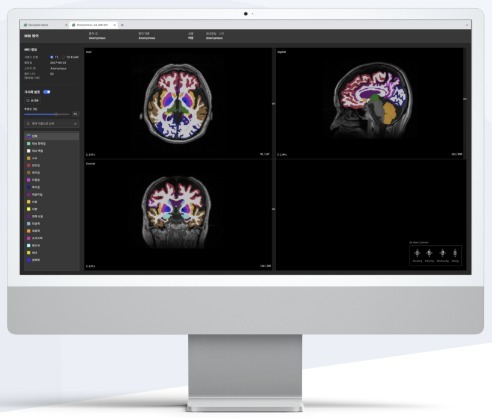
Neurophet AQUA AD Plus quantitatively analyzes Magnetic Resonance Imaging (MRI) and Positron Emission Tomography (PET) images to support the entire treatment cycle, from assessing patient eligibility before administering Alzheimer’s treatments to monitoring side effects during treatment and analyzing effectiveness afterward.
Notably, as global pharmaceutical companies accelerate the commercialization of Alzheimer’s treatments, Neurofit’s business environment is evolving rapidly.
Currently, major players in the global market, including Eli Lilly, Biogen, and Eisai, are competing to dominate the anti-amyloid class of dementia treatments. However, these treatments are known to carry potential side effects, such as brain edema and microbleeds.
This has heightened the importance of imaging platforms that can precisely analyze patients’ brain conditions before and after treatment. Neurophet AQUA AD Plus uses AI to automatically analyze lesions related to brain microbleeds and edema, aiding medical professionals in their treatment decisions.
Neurofit’s strength lies in its high level of expertise in specific diseases. Rather than being a general-purpose medical AI, it has focused on brain diseases, building competitive data and algorithms in this specialized field.
The company is expanding its business beyond dementia to various brain disease areas, including Parkinson’s disease, epilepsy, and depression. There are also discussions about the potential for building a precision medical platform based on brain imaging data.
Expectations for global market entry are rising. Recently, Neurofit participated in the American Society of Neuroradiology (ASNR), showcasing Neurophet AQUA AD Plus, thus accelerating its local business expansion in the U.S.
Industry insiders are closely watching the potential for future collaborations with global pharmaceutical companies. As dementia treatment companies prioritize securing precise imaging analysis platforms to manage drug effects and side effects, Neurofit’s technology could become an integral part of the treatment ecosystem.
While challenges remain, such as expanding hospital adoption, navigating insurance reimbursement systems, and securing global partnerships, Neurofit’s significance is expected to grow as the medical AI market continues to expand.
An industry expert commented that while earlier medical AI companies were limited to simple diagnostic assistance, their roles are now expanding to include treatment decision-making and drug monitoring. Neurophet is one of the South Korean medical AI companies poised to provide tangible benefits in the era of dementia treatment.