The Korea Disease Control and Prevention Agency said May 26 that no Ebola virus disease cases have been detected in South Korea and that Ethiopia and Rwanda have been added to its intensive quarantine management list.
The move brings the total number of intensive quarantine management areas to five, including the Democratic Republic of Congo, Uganda and South Sudan.
Travelers from designated regions, quarantine officers required to report health conditions
The KDCA said it is operating an Ebola response task force and continuously monitoring domestic and international outbreak trends. The agency added that it has strengthened quarantine measures to prevent the virus from entering the country while reviewing rapid response and diagnostic testing systems in preparation for possible suspected cases.
Travelers who visited or stayed in designated management areas are required to report their health conditions to quarantine authorities through the Q-CODE pre-entry quarantine information system or other reporting methods.
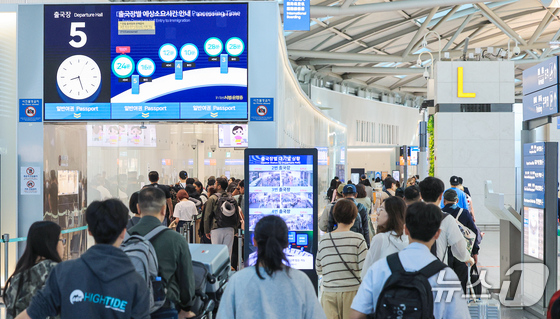
Among the designated countries, only Ethiopia has direct flights to South Korea, while travelers from the other four countries must enter via third countries. The KDCA said it will also strengthen quarantine screening for transit passengers.
For passengers traveling on connected flight itineraries, the KDCA said it reviews passenger manifests in advance and conducts quarantine screening at airport arrival gates.
However, the agency said there have been cases in which travel histories to designated management areas were not fully verified when travelers stayed in third countries for a certain period before entering South Korea. The KDCA said it plans to strengthen quarantine measures for such cases.
For South Korean nationals, the agency plans to use overseas roaming data from telecommunications providers to verify stays in designated management areas. For foreign nationals, it plans to use visa issuance information provided by the Justice Ministry for quarantine management purposes.
The KDCA said it will send guidance text messages to travelers entering and leaving designated management areas and provide medical institutions with overseas travel history information through the DUR-ITS system.
Recipients of the guidance messages must report their health status to quarantine officers upon entry. They are also advised to self-monitor for symptoms during the 21-day incubation period after arrival and immediately report suspected symptoms such as fever or abdominal pain to the 1339 hotline or local health authorities and follow instructions.
The Foreign Ministry recently issued a travel ban for Ituri province in the Democratic Republic of Congo, where deaths linked to the Ebola outbreak continue to rise. The ban took effect at 2 p.m. on May 22. Individuals who visit or stay in travel-restricted countries or regions without obtaining special passport-use authorization may face penalties under the Passport Act.
The KDCA said it is operating a 24-hour rapid response system in preparation for potential suspected cases in South Korea.
If a person reports suspected symptoms through the 1339 hotline or local health authorities, officials will investigate travel history and epidemiological links. If pathogen testing is deemed necessary, the individual will be immediately transferred to a nationally designated isolation treatment facility for care.
The agency also said it continues to provide medical institutions with guidance on handling suspected Ebola patients in the event they seek treatment.
Medical workers treating suspected patients are required to wear personal protective equipment, including gloves and N95-level masks, and follow infection-control protocols to prevent exposure from incidents such as needlestick injuries.
KDCA Commissioner Lim Seung-kwan said, “South Korea is responding at a strengthened level compared with other major countries by designating intensive quarantine management areas based on WHO recommendations and international trends, conducting targeted quarantine screening for travelers entering through third countries, and providing information to travelers and medical institutions.”
Lim added, “As the outbreak situation in Africa continues, citizens who have visited or plan to visit the affected countries should carefully familiarize themselves with government infection prevention guidelines and take extra precautions to avoid exposure risks.”
‘Future suspected or confirmed cases cannot be ruled out’ as authorities closely monitor situation
Ebola virus disease is an acute febrile hemorrhagic illness caused by Ebola virus infection.
The disease can spread through contact with infected animals or through direct or indirect contact with the blood or bodily fluids of infected patients or deceased individuals.
In South Korea, Ebola is classified as a Class 1 infectious disease.
Early symptoms include fever, vomiting, diarrhea and abdominal pain.
In severe cases, the disease can lead to bleeding, reduced white blood cell counts, low platelet counts and elevated liver enzyme levels.
Fatality rates can reach as high as 90%, depending on the virus strain and the quality of national healthcare systems.
According to a World Health Organization announcement released May 24, more than 900 suspected cases have been reported in the Democratic Republic of Congo, while Uganda has confirmed five cases, including one death.
The WHO Emergency Committee raised the risk level within the Democratic Republic of Congo from “high” to “very high” and assessed Uganda’s risk level as “high.”
However, the WHO continues to assess the risk of global spread as “low.”
Taking into account Ebola’s transmission through direct and indirect contact with bodily fluids or blood, the KDCA also currently assesses the risk of domestic transmission or importation into South Korea as “low.”
At the same time, the KDCA said it “cannot rule out the possibility of suspected or confirmed cases among future arrivals into South Korea” and added that it will review whether to raise the country’s overall risk assessment if conditions change, including the emergence of suspected Ebola patients or confirmed cases outside currently affected regions.