The World Health Organization (WHO) has declared an international public health emergency (PHEIC) regarding the Ebola outbreak in the Democratic Republic of the Congo, heightening global concerns.
Notably, the currently spreading Bundibugyo Ebola lacks an approved specific vaccine or treatment, unlike the previously dominant Zaire Ebola strain. The situation is further complicated as the outbreak spreads in conflict-ridden areas marked by armed clashes and security instability, intensifying international anxiety.
In response, the South Korean government has convened its first Overseas Influx Situation Assessment Meeting, involving key departments such as the Korea Disease Control and Prevention Agency, the Ministry of Foreign Affairs, and the Ministry of National Defense, to review domestic response measures and protection plans for citizens abroad. However, health authorities emphasize that the current Ebola outbreak is not an airborne disease that spreads rapidly like COVID-19. They also clarify that the term variant Ebola, recently used by some, is inaccurate.
No Vaccine or Treatment for Bundibugyo Strain… WHO Warns Situation May Deteriorate
On Monday, WHO Director-General Tedros Adhanom Ghebreyesus stated at an African Union (AU) meeting that delays in confirming infection cases have hampered response efforts, adding that the situation is likely to worsen before it improves.
Currently, over 900 suspected Ebola cases have been reported in the Democratic Republic of the Congo, with confirmed cases and deaths also occurring in neighboring Uganda. Recently, WHO has elevated the risk assessment for the Democratic Republic of the Congo to very high and for Uganda to high. As of May 24, a total of 918 suspected cases and 224 deaths have been recorded.
The epicenter of the outbreak is the Ituri region in eastern Democratic Republic of the Congo. Some cases have spread to the North Kivu and South Kivu regions, and Uganda has tightened some border controls as confirmed cases emerged during border crossings.
This situation raises international concerns because the currently spreading virus is the Bundibugyo Ebola strain. Most approved Ebola vaccines and treatments have been developed based on the Zaire strain, leaving limited data on their effectiveness against the Bundibugyo strain.
Additionally, the ongoing armed conflicts and security issues unique to eastern Congo are complicating response efforts. WHO and international medical organizations report that contact tracing has been ineffective, and attacks on medical facilities coupled with public distrust have delayed initial responses.
High Fatality Rate, But Different From COVID-19… WHO Maintains Low Global Risk Level
However, WHO continues to classify the global risk level as low. This assessment considers that Ebola is not a respiratory infectious disease primarily transmitted through droplets or air like COVID-19, but rather spreads through contact with the blood and bodily fluids of infected individuals.
Ebola virus disease is an acute febrile and hemorrhagic illness caused by Ebola virus infection. Symptoms include fever, vomiting, diarrhea, and abdominal pain, with severe cases potentially leading to bleeding and organ damage. The fatality rate can reach up to 90%, depending on the strain and medical environment.
Koh Jae-young, spokesperson for the Korea Disease Control and Prevention Agency, stated during a briefing on Monday that Ebola is not an infectious disease transmitted through droplets or respiratory means like COVID-19, but rather a disease transmitted through contact with blood and bodily fluids, and added that WHO also maintains a low global risk level at present.
The Korea Disease Control and Prevention Agency has also stated that the term variant Ebola used by some media outlets is inaccurate. The currently circulating Bundibugyo Ebola virus is a strain that was already identified in Uganda in 2007, indicating it is not a new variant or mutation.
During the briefing, Min Yu-jung, head of the Emerging Infectious Diseases Response Division, explained that the Bundibugyo Ebola virus is one of the strains identified in 2007, and emphasized that it should be referred to as Bundibugyo Ebola, Bundibugyo strain Ebola, or an outbreak caused by the Bundibugyo strain rather than as a variant or mutation.
Government Strengthens Quarantine and Overseas Citizen Protection Measures… Activates First Overseas Influx Situation Assessment Meeting
Following WHO’s declaration of an international public health emergency, the government is elevating its response level to prepare for potential domestic cases. Although no domestic cases have been reported so far, WHO’s elevation of the risk level for the Democratic Republic of the Congo and confirmed cases and deaths in neighboring Uganda have led to strengthened quarantine and overseas influx response measures.
In light of this, the Korea Disease Control and Prevention Agency held a crisis assessment meeting following the WHO emergency declaration, issuing a crisis alert at the ‘interest’ level and forming a task force for Ebola virus disease.
On Thursday, a 2026 First Overseas Influx Situation Assessment Meeting will be held with participation from 15 agencies, including the Office for Government Policy Coordination, the Ministry of Foreign Affairs, the Ministry of Justice, the Ministry of National Defense, the Ministry of Land, Infrastructure and Transport, and the Ministry of Oceans and Fisheries, to discuss protective measures for citizens abroad in outbreak countries and neighboring nations, enhanced quarantine procedures, and phased entry and exit management plans.
The focus quarantine management areas have also been expanded from the existing Democratic Republic of the Congo, Uganda, and South Sudan to include Ethiopia and Rwanda, totaling five countries.
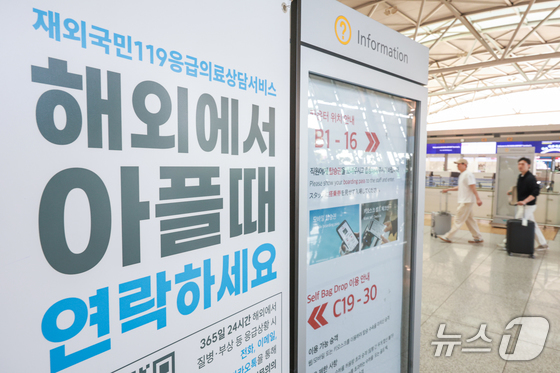
In particular, considering the lack of direct flights from many African countries, the government has decided to strengthen quarantine measures for travelers entering via third countries. They plan to track and manage not only connecting flight information but also overseas roaming data from telecommunications companies and visa information from the Ministry of Justice for travelers with separate ticketing.
Kim Ok-soo, head of the Quarantine Policy Division at the Korea Disease Control and Prevention Agency, stated that given the nature of countries without direct flights, it’s necessary to manage cases of people entering with separate tickets after staying in a third country, and added that it’s also strengthening quarantine for those entering through indirect routes using roaming information and visa issuance data.
The Ministry of Foreign Affairs has designated Ituri Province in the Democratic Republic of the Congo, where fatalities have concentrated, as a travel ban area and is enhancing local monitoring and safety notifications through diplomatic missions. The Ministry of National Defense and the Korea Disease Control and Prevention Agency have begun to provide local action guideline training and emergency contact system operations for the troops deployed in South Sudan.
Kim Gi-nam, Deputy Director of the Korea Disease Control and Prevention Agency, stated that it will continuously monitor the status of the Ebola virus disease and responses from various countries, and it will review the infectious disease response system to prevent domestic cases and protect citizens abroad in collaboration with relevant departments.