The U.S. has unveiled regulatory reforms as the focus of new drug development competition shifts from research and development (R&D) to attracting clinical trials. With China and Australia rapidly gaining ground in the early clinical trial market, the U.S. Congress has taken the initiative to instruct the U.S. Food and Drug Administration (FDA) to streamline the Investigational New Drug (IND) approval process.
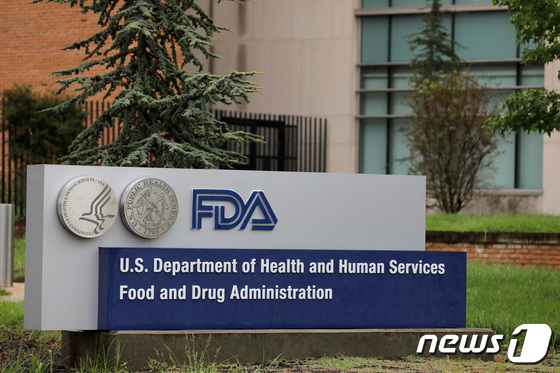
According to recent reports from the biotech industry, the U.S. House of Representatives passed a budget bill for fiscal year 2027 that directs the FDA to review reforms to the IND system, aiming to accelerate early-stage drug development.
The accompanying committee report expressed concerns about the trend of early drug development moving overseas. It specifically highlighted how Australia and China’s lower barriers to clinical entry have eroded U.S. competitiveness, as these countries aggressively court early-stage clinical trials from global biotech firms.
The committee urged the FDA to reassess its IND submission guidelines, advocating for the relaxation of regulations that lack scientific merit or can be adjusted without compromising safety.
They also emphasized the need to reduce administrative burdens and implement a risk-based review system tailored to the unique characteristics of early human clinical trials.
This push for reform is largely driven by China’s meteoric rise in the biotech sector. While the U.S. has traditionally been the hub for global early-stage clinical trials, China is now attracting more demand. This shift is attributed to the enhanced R&D capabilities of Chinese biotech companies, increased government support, and competitive patient recruitment strategies.
The congressional report’s explicit mention of China as a competitor underscores the growing sense of urgency in Washington.
Perhaps the most intriguing proposal is the consideration of adopting Australia’s Clinical Trial Notification (CTN) system.
The current U.S. system requires FDA review and approval of submitted materials before a clinical trial can begin. In contrast, Australia allows low-risk clinical trials to proceed with just the approval of the Human Research Ethics Committee (HREC), bypassing additional regulatory scrutiny.
This approach positions regulatory agencies as registrars rather than gatekeepers.
Australia has leveraged this system to successfully attract early-stage clinical trials from global biotech companies, significantly boosting its competitive edge.
Congress has recommended that the FDA explore a pilot program allowing academic medical institutions and ethics committees to review low-risk INDs.
This suggestion essentially proposes a partial relaxation of the FDA-centric structure to test an Australian-style clinical trial notification system.
The FDA has already initiated work in this direction.
The White House Office of Management and Budget (OMB) is currently reviewing the FDA’s proposal for a Fast IND Pilot Program.
Industry experts believe that the convergence of congressional pressure and internal FDA discussions could significantly accelerate the clinical entry process for low-risk drugs.
Meanwhile, the South Korean biotech industry is closely monitoring these developments.
A recent study by ING, a global financial group, found that while South Korea ranks second in Asia for biotech innovation, it’s experiencing a slowdown in clinical trial momentum.
The number of ongoing clinical trials in South Korea is projected to decrease from 2,307 in 2024 to 2,175 in 2025.
However, if the FDA streamlines its clinical and approval processes and embraces artificial intelligence (AI) and real-world data to accelerate drug development, several South Korean biotech firms could benefit. These include Samsung Biologics (Contract Development and Manufacturing Organization (CDMO), manufacturing facility review), Celltrion (biosimilar approvals), SK Biopharm (new drug development), Lunit (expanding AI and real world evidence (RWE) applications), and Medipost (cell therapy).
An industry insider noted that in the past, superior medical infrastructure and personnel were the cornerstones of clinical competitiveness. Now, the speed of clinical entry is paramount. If the U.S. proceeds with regulatory relaxation, the race to attract global clinical trials will intensify dramatically.
They added that streamlined FDA processes could lead to significant reductions in drug development costs and timelines. It’s crucial for South Korea to reassess its clinical trial approval procedures and overall regulatory landscape to remain competitive.