

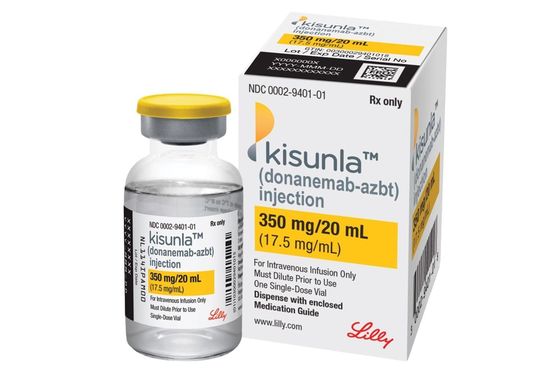
Lilly, a major pharmaceutical company, has launched procedures in South Korea for a global clinical trial of its Alzheimer’s treatment, Kisunla (donanemab), targeting Lewy body dementia patients. The medical community is watching closely to see if Kisunla, already approved for Alzheimer’s, can expand its reach to address the underserved area of Lewy body dementia.
According to the Ministry of Food and Drug Safety on Friday, Lilly received approval for its global Phase 2 clinical trial plan for donanemab (LY3002813) on Wednesday.
This trial will focus on patients showing key clinical symptoms of either early cognitive impairment or Lewy body dementia. Researchers plan to assess donanemab’s safety and effectiveness by comparing it to a placebo group.
Several prominent South Korean medical centers are participating in the trial, including Ewha Womans University Mokdong Hospital, Inha University Hospital, Gangnam Severance Hospital, Severance Hospital, Konkuk University Hospital, and Hanyang University Hospital.
Donanemab is an anti-amyloid antibody treatment developed by Lilly. It works by clearing beta-amyloid plaques in the brain, potentially slowing Alzheimer’s progression.
Marketed as Kisunla in the U.S., the drug has gained approval in Japan, China, the UK, and Australia. It recently expanded its reach by securing sales approval from the European Union.
Kisunla proved its efficacy through the global Phase 3 TRAILBLAZER-ALZ 2 trial. This study, involving 1,736 early-stage Alzheimer’s patients, led to the U.S. Food and Drug Administration (FDA) approval.
Lilly reports that Kisunla significantly slows cognitive decline and preserves daily living skills.
A key feature of Kisunla is its design to allow treatment cessation once amyloid plaques are minimized, potentially reducing patient burden and treatment costs.
This research is groundbreaking in its attempt to extend treatment from Alzheimer’s to Lewy body dementia. Lewy body dementia, the second most common degenerative dementia after Alzheimer’s, is characterized by hallucinations, cognitive decline, and Parkinson’s-like movement disorders.
Current Lewy body dementia treatments focus on symptom management. While drugs exist to control cognitive decline and hallucinations, none slow disease progression. This gap makes Lewy body dementia a critical area of unmet medical need.
The trial will include patients with confirmed alpha-synuclein and amyloid pathology. Lilly aims to evaluate donanemab’s safety and efficacy in this group to explore its potential in treating Lewy body dementia.
The pharmaceutical industry is increasingly applying insights from Alzheimer’s research to other neurodegenerative diseases. The results of this trial could potentially expand Kisunla’s application beyond Alzheimer’s to include Lewy body dementia, marking a significant advancement in neurodegenerative disease treatment.