American researchers have created synthetic cells capable of eating, growing, and dividing. While these synthetic cells can’t be considered fully alive, their ability to simultaneously perform key life functions marks a significant breakthrough in artificial life research.
The New York Times and the University of Minnesota reported on Wednesday that a team led by synthetic biologist Kate Adamala at the University of Minnesota successfully created synthetic cells dubbed SpudCells by combining non-living chemical components.
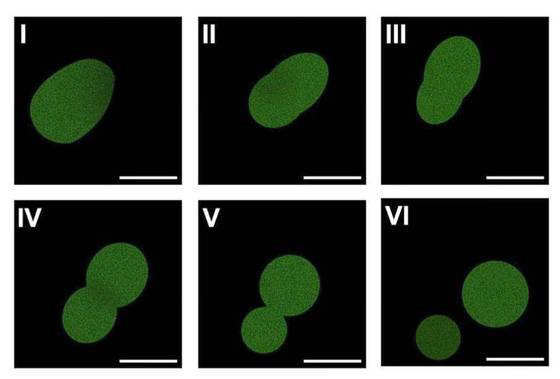
The name SpudCell comes from the cells’ potato-like appearance. The team mixed proteins, simple molecules, genes from viruses and E. coli, and lipid membrane materials to create cell-like droplets. Some of these droplets exhibited cellular behavior, initiating chemical reactions and absorbing nutrients from their environment to grow.
The researchers observed that SpudCells consumed nutrients, grew, and divided within hours. They also found that mutant SpudCells, which were more efficient at absorbing nutrients, outlived the original cells. This demonstrated a basic form of selection and competition.
However, these SpudCells fall short of being classified as fully living organisms. They can’t produce their own ribosomes, essential for protein synthesis, and require external sources. Moreover, their functionality diminishes after five to ten generations. The researchers emphasize that their work explores the boundary between life and non-life rather than creating definitive living entities.
This groundbreaking study hasn’t yet been published in a peer-reviewed journal. The team has released a comprehensive 190-page research description online and reports that it’s currently undergoing journal review.