Mr. Kim (82, name changed) rushed to the emergency room after experiencing sudden blurred vision and weakness in his limbs. Detailed tests revealed a metastatic tumor in the center of his pons, part of the brainstem. Among doctors, the brainstem is considered one of the most delicate areas for surgery.
The pons, a crucial component of the brainstem, connects the cerebrum, cerebellum, and spinal cord. It houses nerves that regulate vital functions like breathing, heartbeat, eye movement, facial sensation, and limb control.
Kim’s condition deteriorated rapidly. His consciousness faded, and he lost strength in all four limbs. He also developed diplopia, seeing double images. The tumor’s location posed a significant challenge, as it was situated in the brainstem’s core, which controls essential functions like breathing, heart rate, consciousness, eye movement, and limb sensation.
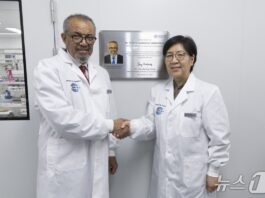
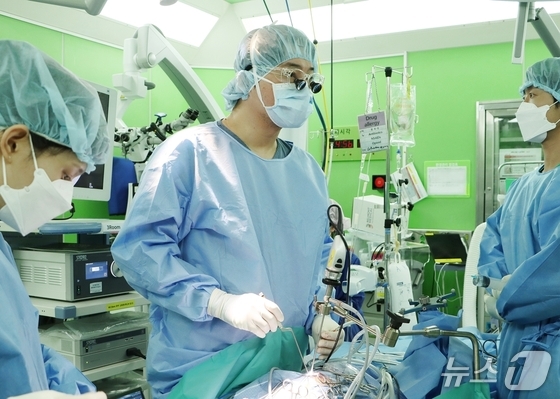
Dr. Jeon Chi-man’s neurosurgery team at Hallym University Sacred Heart Hospital carefully assessed Kim’s condition from multiple angles before opting for minimally invasive endoscopic surgery. The operation successfully removed the tumor, leading to significant improvements in Kim’s motor function and diplopia. He can now walk unassisted.
The hospital reported on Tuesday that the brainstem is a critical junction connecting the cerebrum and spinal cord, housing essential life-sustaining functions. It regulates breathing, heart rate, blood pressure, consciousness, eye movement, facial sensation, and limb motor and sensory functions.
The brainstem’s dense concentration of vital nerve nuclei and fibers means that even minor damage can result in paralysis, sensory loss, double vision, swallowing difficulties, or reduced consciousness. Severe cases may even impact breathing and heart function. This makes the brainstem one of the most challenging surgical sites for neurosurgeons.
The surgical approach is narrow, with minimal space between healthy neural tissue and the lesion. While precise targeting of the tumor is crucial, any disturbance to normal brainstem tissue during the approach can lead to life-altering complications. This has long fueled the perception that such surgeries are extremely risky and challenging.
Treatment decisions for brainstem metastases typically involve weighing the lesion’s size and location against the patient’s overall condition to determine whether radiation therapy or surgical intervention is appropriate. Radiation therapy aims to control tumor growth without opening the skull.
However, radiation alone isn’t always sufficient. In cases where the tumor grows rapidly or compresses the brainstem, causing quick deterioration of neurological symptoms, waiting for radiation to take effect may not be viable. Large lesions or those accompanied by internal bleeding, edema, or compression symptoms may necessitate surgical removal.
Kim’s case fell into this category. The tumor had already infiltrated deep into his pons, causing rapid decline in consciousness and motor function. Dr. Jeon determined that radiation therapy alone wouldn’t reverse the rapidly worsening neurological symptoms and opted for surgical intervention.
The team performed a minimally invasive keyhole craniotomy, making an incision only the size of a coin. They then accessed the brainstem lesion using only an endoscope, foregoing traditional microscopic techniques. Endoscopes offer superior visibility in confined spaces, allowing for precise navigation between critical structures.
In contrast, conventional microscopic surgery often requires extensive skull opening or retracting the cerebellum and temporal lobe, risking post-operative complications like brain swelling, dizziness, and speech disorders. Endoscopic approaches minimize brain tissue manipulation while accessing the target area.

Using this minimally invasive endoscopic technique, Dr. Jeon’s team successfully removed the deep-seated pons tumor while preserving surrounding neural structures. The surgery was a success, and the patient has regained the ability to walk independently.
Dr. Jeon noted that while patients with brainstem tumors or cavernous malformations are often advised to consider radiation or observation due to surgical risks, surgery may be the crucial or only option for those with progressive symptoms.