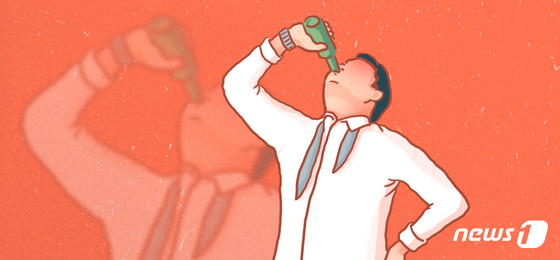
Drinking alcohol to forget emotional pain after experiencing a traumatic or shocking event may increase the risk of depression, a study has found. While alcohol may provide a temporary sense of relief, it can ultimately impair the brain’s ability to recover, weaken stress-regulation capacity and worsen depressive symptoms.
On Aug. 7, the mental health research team at Kangbuk Samsung Hospital, led by psychiatry professors Jeon Sang-won and Cho Sung-joon, said it reached the finding after analyzing the relationship between stress factors, alcohol consumption and depressive symptoms among 8,432 working adults who underwent mental health screenings at the hospital’s Corporate Mental Health Research Institute.
The researchers categorized various stress factors into unexpected events such as traffic accidents, crimes and safety incidents; illnesses; interpersonal conflicts; and workplace stress. They then examined their associations with alcohol consumption levels, age and depressive symptoms.
Alcohol consumption was assessed based on whether participants drank, the amount they consumed and tendencies toward alcohol dependence, while depressive symptoms were measured using the Center for Epidemiologic Studies Depression Scale (CES-D). The results showed that among the various stress factors, experiencing an unexpected event was associated with the largest increase in depression risk depending on alcohol consumption levels.
In particular, people who typically drank more or showed stronger tendencies toward alcohol dependence experienced significantly greater worsening of depressive symptoms after a shocking event. The findings suggest that drinking as an immediate response to stress may instead contribute to worsening depression.

Professor Jeon Sang-won said, “While drinking to ease psychological distress may temporarily feel as though it alleviates physical and mental pain, it can ultimately impair the brain’s neurobiological resilience and weaken its ability to regulate stress, potentially worsening depressive symptoms as a side effect.”
Professor Cho Sung-joon said that people who experience unexpected events need a range of measures to help them recover from stress safely without relying on alcohol, including healthy stress-management systems, counseling and early intervention programs targeting alcohol use. The study was published in the latest issue of the international journal Brain Sciences.
Meanwhile, an in-depth analysis of alcohol-related health behaviors by the Korea Disease Control and Prevention Agency found that last year, six in 10 adults drank at least once a month, three in 10 engaged in binge drinking and one in 10 engaged in high-risk drinking. Among women, the rate of high-risk drinking, which is associated with a higher risk of alcohol dependence, increased across all age groups of 30 and older.
Binge drinking and high-risk drinking increase the risk of various diseases and injuries as well as alcohol dependence, highlighting the need to abstain from or reduce alcohol consumption. Local governments and relevant organizations have also been urged to develop region-specific alcohol prevention and management policies that reflect drinking patterns by gender and age.