Patients with REM sleep behavior disorder who shout or move their arms and legs while asleep can now be screened using magnetic resonance imaging (MRI) to identify those at higher risk of developing Parkinson’s disease.
The approach could help identify patients who need further testing before undergoing positron emission tomography (PET), which is costly and involves radiation exposure.
Samsung Medical Center said on Aug. 10 that a research team led by Professor Joo Eun-yeon of the Department of Neurology, Professors Kim Eung-yeop and Son Beom-seok of the Department of Radiology, and Professor Kim Jae-rim of Sejong Chungnam National University Hospital conducted the study.
The findings were published in the latest issue of the international journal Brain Imaging and Behavior.
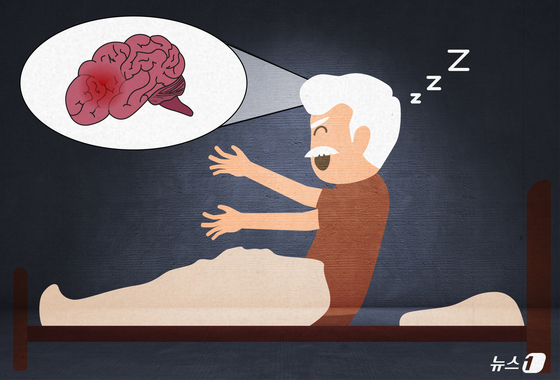
REM sleep behavior disorder is a condition in which people physically act out their dreams while sleeping, including shouting or moving their arms and legs.
An estimated 0.5% to 1% of the general population has REM sleep behavior disorder. The condition is mainly seen in middle-aged and older adults, particularly those in their 50s and older, and is reported to occur predominantly in men after age 50.
The disorder is often detected during the early stages before Parkinson’s disease develops. However, not all patients with REM sleep behavior disorder go on to develop Parkinson’s, making early identification of high-risk patients an important goal for treatment and monitoring.
Dopamine transporter (DaT) PET is currently one of the most widely used tests for assessing the risk of Parkinson’s disease.
However, the test is expensive, is not widely available and requires the use of radioactive isotopes, making it impractical to perform on every patient.
To address these limitations, the research team focused on neuromelanin-sensitive MRI.
Neuromelanin is a pigment found in dopamine-producing nerve cells and decreases when these neurons are damaged.
By analyzing the amount and signal intensity of neuromelanin on MRI scans, researchers can indirectly assess the extent of damage to dopamine-producing neurons.
The research team performed neuromelanin-sensitive MRI scans on 66 patients with REM sleep behavior disorder and 30 healthy controls.
The patients were then divided into an abnormal dopamine PET group of 37 patients and a normal group of 29 based on their PET results, and the groups were compared.
The results showed that only patients with abnormal dopamine PET findings had a marked reduction in neuromelanin volume and signal intensity on MRI.
By contrast, patients with normal PET results showed no significant differences compared with the healthy control group.
The findings suggest that neuromelanin-sensitive MRI could be used to identify high-risk patients who need further testing by reflecting damage to dopamine-producing neurons.
However, the researchers emphasized that the findings do not mean neuromelanin-sensitive MRI can replace dopamine PET.
Instead, the study suggests a potential new strategy in which patients are first screened with MRI to identify those at high risk, followed by PET only for those who require further evaluation.
If applied in clinical practice, the strategy could reduce unnecessary testing and allow medical resources to be used more efficiently for patients who require detailed evaluation.

Professor Son Beom-seok said, “Neuromelanin-sensitive MRI can be repeated without concerns about radiation exposure and has the advantage of being performed alongside conventional brain MRI.”
Professor Kim Eung-yeop said, “These findings suggest that neuromelanin-sensitive MRI could serve as an imaging biomarker for identifying patients who require further evaluation.”
Professor Joo Eun-yeon added, “Because the risk of disease progression varies from patient to patient, we expect this approach to help develop personalized management strategies in which testing and follow-up are tailored to each patient’s individual risk.”