

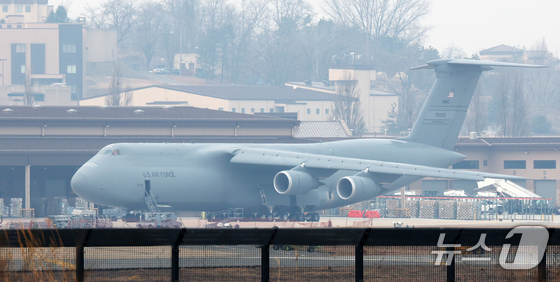
The Korea Disease Control and Prevention Agency (KDCA) and U.S. Forces Korea (USFK) are set to resume quarantine operations for U.S. military aircraft and contracted military planes, a practice that was suspended during the COVID-19 pandemic.
On Thursday, the two entities signed a memorandum of understanding (MOU) to enhance cooperation on U.S. military aircraft quarantine procedures. This agreement was reached during the 2026 Status of Forces Agreement (SOFA) Disease Prevention and Control Subcommittee meeting held in Osong.
The KDCA and USFK have been regularly convening the SOFA Disease Prevention and Control Subcommittee to share information on infectious disease trends and discuss key issues.
Established in December 2010 following the 187th SOFA Joint Committee, this subcommittee has been a forum for discussing matters related to infectious disease prevention, management, and health and hygiene concerns between South Korea and the U.S.
During the height of the COVID-19 pandemic, the subcommittee facilitated the exchange of data on confirmed cases in both countries and coordinated strategies for conducting epidemiological investigations in the event of cluster outbreaks.
The newly signed MOU outlines plans to reinstate quarantine protocols for U.S. military and contracted aircraft that were suspended due to COVID-19. It also aims to bolster cooperation between the two agencies to prevent the introduction and spread of infectious diseases.
Key aspects of the cooperation include implementing an aircraft health status reporting system, expanding quarantine checkpoints nationwide, and enhancing the sharing of infectious disease outbreak information.
Under the terms of the MOU, USFK will conduct health screenings for personnel entering through seven designated locations. They will also implement comprehensive quarantine measures, including testing, isolation, treatment, contact tracing, and disinfection of transportation vehicles.
USFK has agreed to submit monthly Aircraft Health Status Reports to the KDCA, particularly when symptomatic individuals are identified. In cases where quarantinable infectious diseases are confirmed, USFK will immediately notify the KDCA.
The scope of quarantine cooperation will expand beyond the previous focus on Osan Air Base to encompass seven major bases and airports across the country. These include facilities in Gunsan, Daegu, Gimhae, Gwangju, Suwon, and Camp Humphreys in Pyeongtaek. This expansion aims to ensure consistent quarantine procedures nationwide.
The agreement also strengthens information sharing related to infectious diseases. USFK will continuously gather data on potential infectious disease threats and share updates on Class 1, 2, and 3 infectious diseases with the KDCA through quarterly SOFA Disease Prevention and Control Subcommittee meetings.
A USFK spokesperson emphasized that safeguarding the health and safety of both U.S. military personnel and South Korean citizens is a cornerstone of the U.S.-South Korea alliance. They pledged to continue enhancing public health response capabilities through swift and transparent information sharing with the KDCA.
The KDCA stated that this MOU represents a proactive step in managing the risk of infectious diseases entering the country via U.S. military aircraft. It also reinforces the rapid and accurate information-sharing network between the two entities. The agency reaffirmed its commitment to maintaining close cooperation to protect public health and safety from infectious disease threats.