TXINNO Bioscience has reported promising results from its Phase 1 clinical trial for a new drug targeting EGFR-mutated lung cancer patients who failed previous treatments. The study showed tumor shrinkage in 4 out of 9 patients.
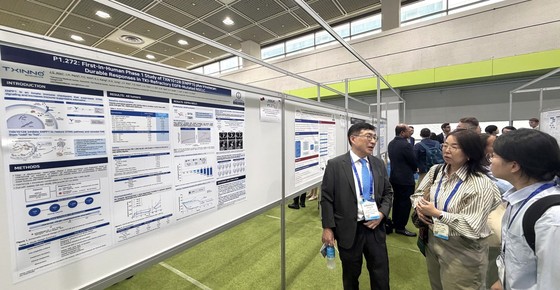
On Monday, TXINNO Bioscience unveiled the initial findings of its oral ENPP1 inhibitor TXN10128 at the World Lung Cancer Conference (IASLC WCLC 2026) in Seoul.
The trial combined TXN10128 with the chemotherapy drug irinotecan in non-small cell lung cancer (NSCLC) patients whose disease had progressed despite treatment with third-generation EGFR-targeted therapies and platinum-based chemotherapy.
Among the nine evaluable patients, four experienced significant tumor reduction, yielding an objective response rate (ORR) of 44.4%. The disease control rate (DCR) reached 100%, including patients with stable or shrinking tumors. The median progression-free survival (mPFS) was 6.7 months.
TXN10128 is a novel drug candidate designed to block ENPP1, a protein that aids cancer in evading immune system attacks. By inhibiting ENPP1, it aims to reinvigorate the immune response against cancer cells.
Of the 19 trial participants, only one patient (5.3%) experienced severe treatment-related adverse events classified as grade 3 or higher. The company reported no new safety concerns beyond those already associated with irinotecan treatment.
TC Nova received approval from the Ministry of Food and Drug Safety for the clinical trial plan (IND) of TXN10128’s Phase 2 trial, dubbed ENRISE, in July. Patient enrollment is set to begin in the fourth quarter of this year, aiming to further validate the promising efficacy and safety profile observed in the Phase 1 trial.
Dr. Ahn Jin-seok from Samsung Medical Center commented that these results are significant as they point to a potential new treatment approach for EGFR-mutated non-small cell lung cancer patients who have progressed after standard therapies. However, further research is crucial to confirm the drug’s efficacy and safety profile.