A groundbreaking study on artificial intelligence (AI) assisted double reading of chest X-rays has gained recognition at South Korea’s largest radiology conference.
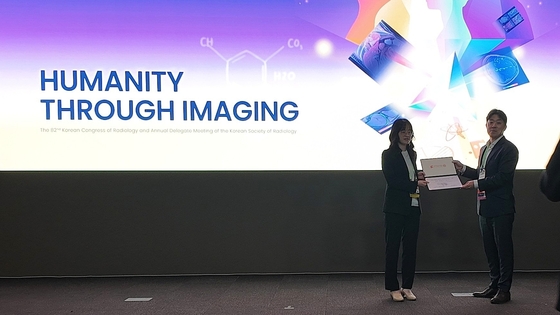
Deepnoid, a medical AI firm, announced on Monday that their collaborative research with Professors Hwang Ui-jin and Song Ji-young from Seoul National University Hospital earned the Best Abstract Award at KCR 2026.
The Korean Congress of Radiology (KCR), organized by the Korean Society of Radiology, was held from September 9-12 at KINTEX 2 in Goyang, South Korea.
This study’s innovative approach allows doctors to interpret images first, with AI then comparing the physician’s report to the images, flagging potential oversights or misinterpretations for review.
The research team analyzed 775 chest X-rays interpreted by six radiologists. Of these, 140 images showed abnormalities requiring further verification, while 635 were normal.
On average, the AI system identified 16.1% of images for re-examination. Upon review, medical staff revised 30.7% of these interpretations. The average sensitivity – the ability to correctly identify patients with conditions – improved from 32.3% to 37.6% with AI assistance. Overall accuracy remained stable, marginally increasing from 84.5% to 84.8%.
The AI review process added just 3.3 seconds per image on average. Researchers noted that by focusing only on AI-flagged images, rather than re-examining all scans, the additional workload for medical staff was minimized.
Following the Ministry of Food and Drug Safety approval in June for its AI-powered chest X-ray report generation tool, M4CXR, Deepnoid has expanded its reach to several major hospitals. M4CXR analyzes chest X-rays and drafts reports for normal findings and 41 types of abnormalities.
Last month, Deepnoid broke new ground by supplying its technology to Pohang Semyeong Christian Hospital, its first private general hospital client. The company aims to evolve into a comprehensive medical AI service provider, supporting various aspects of healthcare workflows.
Dr. Song Ji-young of Seoul National University Hospital emphasized the ongoing research into AI applications that enhance diagnostic accuracy while preserving physicians’ independent judgment, as AI’s role in medical diagnostics continues to expand.