Seven years after the Constitutional Court ruled that criminalizing abortion was unconstitutional, the government has officially initiated procedures to introduce abortion pills, aiming for implementation as early as the first quarter of next year.
The plan involves a pill-form medication that can be used within the first nine weeks of pregnancy. For the initial two years, prescriptions and dispensing will occur at hospitals, with a gradual transition to a system where doctors prescribe and pharmacies dispense the medication.
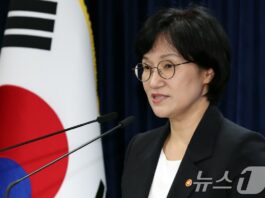
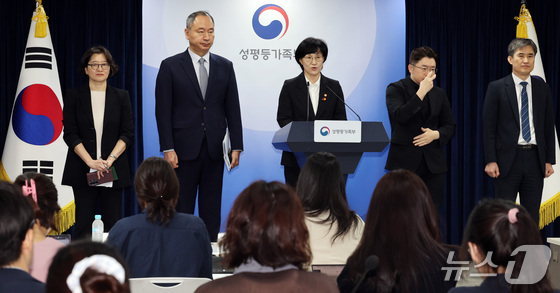
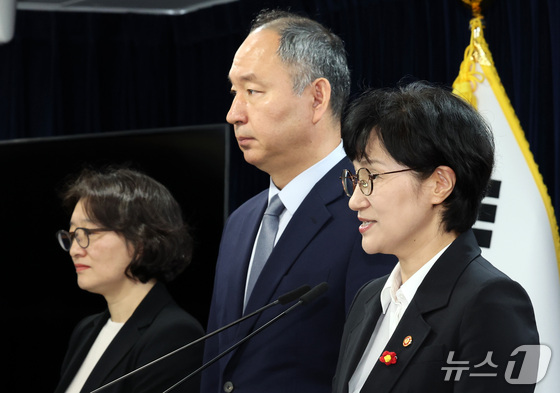
After seven years of constitutional conflicts, the government is moving forward with introducing abortion pills. On Wednesday, the Ministry of Gender Equality and Family, the Ministry of Health and Welfare, and the Ministry of Food and Drug Safety (MFDS) held a briefing at the Government Seoul Building to announce this initiative.
This plan addresses the institutional gap that has persisted since the Constitutional Court’s ruling on the unconstitutionality of the abortion law seven years ago.
Despite the Constitutional Court declaring the abortion law unconstitutional on April 11, 2019, subsequent measures, including approval for abortion pill use and related legal amendments, have been virtually nonexistent.
With no legal framework for abortion, cases of illegal online sales of abortion medication have emerged. Additionally, abortion procedures’ costs vary by hospital since they aren’t covered by health insurance.
During a Cabinet meeting on July 14, President Lee Jae Myung stated that women are resorting to purchasing medication overseas, which has led to accidents. Isn’t it irresponsible for the government to allow this situation to continue? This comment accelerated official discussions within the government.
Minister of Gender Equality and Family, Won Min-kyung, declared that she’s committed to introducing abortion pills within her term in office.
Previously, Hyundai Pharmaceutical applied for product approval for the abortion pill Mifepristone and Misoprostol three times from 2021 to 2024. However, the MFDS delayed the review process, citing the need for amendments to the Maternal and Child Health Act.
Progress was made on August 19 when the Ministry of Legislation interpreted that product approval is possible even if abortion methods aren’t explicitly stated in the Maternal and Child Health Act. They concluded that if the medication meets safety and efficacy requirements, the MFDS must approve it.
MFDS: Regulatory Review is Well Underway … Supplemental Materials Under Review
The government plans to introduce Hyundai Pharmaceutical’s Mifegymiso, which involves taking one 200 mg tablet of Mifepristone followed by four 200 mcg tablets of Misoprostol.
Mifepristone blocks progesterone, necessary for maintaining pregnancy, effectively terminating it. Misoprostol induces uterine contractions and cervical dilation. Together, they’re reportedly about 95% effective.
The medication has been approved for use within 63 days, or nine weeks, of pregnancy. The MFDS is reviewing the approval for imported products, assessing safety, efficacy, quality, and a risk management plan that includes post-marketing adverse event monitoring.
Shin Joon-soo, Director of the Drug Safety Bureau at the MFDS, stated that if the company submits adequate supplementary materials, it’ll prioritize safety in our review and grant approval. It aims to introduce it as early as the first quarter of next year, collaborating closely with the company.
For the first two years, the Ministry of Welfare plans to have doctors prescribe and dispense the medication directly within medical institutions. They’ll then review side effects and safety to consider expanding the application scope.
Kwon Soon-hun, Director of Health Policy at the Ministry of Health and Welfare, explained that during this period, it’ll monitor for safety issues and may extend the review period based on revisions to criminal law and the Maternal and Child Health Act.
The government chose direct prescription by doctors because, while the criminal law regarding abortion has lost validity, legal uncertainties remain about pharmacists dispensing and selling the medication. Director Kwon added that they’d initially operate under direct prescriptions by doctors to address these legal uncertainties.
Health insurance coverage and medication pricing are yet to be determined. Director Kwon noted that for health insurance coverage, the pharmaceutical company must apply for reimbursement. It’ll separately review coverage for pre-dispensing tests.
If introduced as a non-covered service, the government plans to implement a system publicly disclosing the medication’s price. Director Kwon mentioned that if the company applies for reimbursement, it’ll assess the price, but it may not be covered. The exact price is still uncertain.
He continued that if it’s a non-covered service, it’ll require public price disclosure, and healthcare institutions must explain costs to patients. It’ll prepare a system for the Health Insurance Review and Assessment Service to receive reports on non-covered services and publicly compare prices.
There are currently no specific age criteria for administering the medication to minors in the product approval application. The government plans to establish separate protective measures for minors using abortion medication.
The Ministry of Gender Equality and Family recognizes the need for psychological and emotional support, alongside counseling, for adolescents during the abortion process. This will be reflected in future guidelines. Regarding mandatory parental consent for prescribing to minors, Minister Won stated that it needs to consider the overall youth protection system and will proceed cautiously.
Minister Won emphasized that institutional deficiencies have prevented safe access to the healthcare system, compromising individual rights. It expects that under the national healthcare system, abortions will be performed more safely, reducing socioeconomic burdens on women.
Minister Jeong Eun-kyung from the Ministry of Welfare stated that it’ll strive to create safe conditions for abortion medication use after its approval.
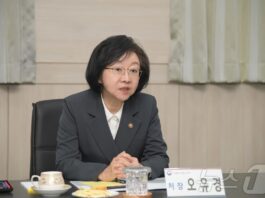
Minister Oh Yoo-kyung from the MFDS concluded that it’ll thoroughly review the application materials for abortion medication approval, prioritizing public safety.