

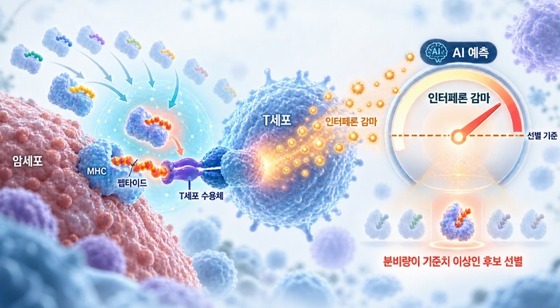
SCL Science said Sept. 22 that a U.S. patent covering NeogenLogic’s “Method and Apparatus for Predicting T-Cell Activation to Peptide-MHC” has received a decision to grant.
The technology uses patients’ genetic information to identify, with AI, neoantigens that are most likely to trigger an actual immune response among newly occurring targets found only in cancer cells.
Neoantigens are protein fragments created by genetic mutations in cancer cells that are not present in normal cells. The basic principle of personalized cancer vaccines is to have a patient’s immune cells recognize these fragments as a kind of “signpost” distinguishing cancer cells and trigger an attack.
NeogenLogic’s technology analyzes how the amino acid sequences of neoantigens and major histocompatibility complex (MHC) molecules interact with T cells. Based on this analysis, it predicts the likelihood that interferon-gamma, an indicator of an immune response, will be secreted above a certain level.
The company expects the technology to allow more targets to be included in mRNA vaccines of the same size while selecting targets that are more likely to trigger an actual response from a patient’s immune cells.
Parent company SCL Science is also expanding AI-based drug development as a key business area. It currently operates a translational medicine research center with KAIST and is pursuing the discovery of drug candidates using big data and the optimization of clinical trial conditions.
In particular, its AI drug development platform supports strategies for segmenting patient populations, expanding drug targets and indications, and identifying companion diagnostic biomarkers. The company is also pursuing a business of licensing out drug candidates identified through the platform.
SCL Science and NeogenLogic will hold an investor presentation Sept. 29 to disclose plans to advance their cancer vaccine into clinical trials. They will also present updates on research and development, their business organization and changes to their research structure.
A NeogenLogic official said, “The key to developing personalized cancer vaccines is accurately identifying, among the many candidates found in cancer cells, the targets that can actually activate a patient’s immune cells.”
The official added, “By establishing a foundation for securing rights to our core technology in the U.S., we have strengthened the basis for joint development and technology commercialization with global pharmaceutical companies. We will continue to increase the business value of our personalized cancer vaccine platform based on our patent portfolio.”