

Medical AI company JLK has published research results from a large-scale stroke imaging database built with Korean university hospitals in an international medical journal. The database preserves original CT and MRI scans collected during hospitalization for patients with acute ischemic stroke and combines them with AI-based quantitative analysis. JLK plans to use the data for clinical validation of its stroke AI solutions and other research.
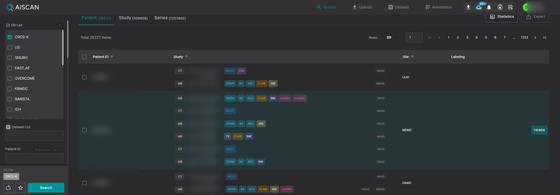
JLK announced on Sept. 30 that a paper on the CRCS-K Imaging Registry and its research platform AISCAN, developed with a research team led by Professor Bumjun Kim of the Department of Neurology at Seoul National University Bundang Hospital, was published in the Journal of the American Heart Association (JAHA), a journal published by the American Heart Association.
Researchers from 18 hospitals across South Korea participated in the study along with JLK researchers. Researchers from the University of Calgary in Canada and the University of New South Wales in Australia also contributed as co-authors.
Using the nationwide multicenter CRCS-K stroke registry, the research team prospectively collected CT, MRI and angiographic images taken during hospitalization for patients with acute ischemic stroke over a three-year period beginning in June 2022. The resulting database included 20,792 patients and 225,159 imaging sequences.
The database includes 37,453 diffusion-weighted imaging scans, 35,242 non-contrast CT scans and approximately 10,000 CT and MR perfusion scans. Three-month functional outcome data were also collected for 98.7% of patients.
While conventional stroke registries typically extract and record selected information from imaging, such as whether a blood vessel is blocked, this database focuses on preserving the original images acquired during hospitalization. JLK’s AI solutions were then applied to quantify infarct volume, perfusion parameters, white matter disease and cerebral microbleeds, linking the measurements with clinical information and three-month outcomes.
The AISCAN research platform supports researchers in using the accumulated data. According to JLK, the platform differs from existing imaging registries by prospectively collecting patients’ images during hospitalization regardless of whether they receive treatment and linking the imaging data with AI-based quantitative analysis.
The database is also continuing to expand. The number of participating institutions has increased to 22, while the number of registered patients had reached approximately 26,750 as of April 2026. Since this year, JLK has continued collecting data in connection with the Ministry of Health and Welfare and Korea Health Industry Development Institute’s AI Application Product Rapid Commercialization, or AX-Sprint, program.
The researchers also presented an example of how the real-world clinical data can be analyzed. When they examined the relationship between the types of imaging performed before treatment and the time required to begin treatment, they found a tendency for treatment initiation to be delayed as more types of imaging were performed. The difference in time from hospital arrival to treatment ranged from approximately 29 to 79 minutes for intravenous thrombolysis and 52 to 139 minutes for thrombectomy.
JLK has used the accumulated data for multicenter validation of its stroke AI solutions, including large-vessel occlusion detection and quantitative assessment of white matter disease. Going forward, the company plans to use the database to validate the performance of new AI solutions, support regulatory submissions and evaluate their clinical utility in real-world healthcare settings.
Professor Bumjun Kim of Seoul National University Bundang Hospital’s Department of Neurology said, “Brain imaging contains some of the richest information available in stroke care, but research has traditionally reduced it to a few variables. This infrastructure, which collects original images from hospitals nationwide, quantifies them with AI and connects them with clinical outcomes, can provide evidence for questions arising in real-world clinical practice.”
JLK Chief Medical Officer Yuisun Ryu said, “The prospective stroke imaging dataset of more than 20,000 patients that we have built with Korean university hospitals provides a foundation for demonstrating the performance and clinical value of JLK’s solutions. Based on our collaborative platform model, we will expand into joint research with healthcare institutions overseas.”
Meanwhile, JLK currently supplies AI stroke solutions to major university hospitals in South Korea and is expanding into international markets based on regulatory approvals from the U.S. Food and Drug Administration (FDA) and Japan’s Pharmaceuticals and Medical Devices Agency (PMDA).
The company aims to build a sustainable cycle in which large-scale clinical evidence accumulated from real-world healthcare settings supports the development of AI standards trusted by physicians, followed by new health technology assessments, broader adoption by healthcare institutions and expansion into global markets.