Graves’ disease is an autoimmune disorder that can cause a rapid heartbeat, unexplained weight loss and bulging eyes. It is the leading cause of hyperthyroidism and has remained a long-standing challenge for patients and physicians.
Despite advances in understanding the disease, treatment options have changed little for decades. Many patients relapse after treatment, while those requiring long-term therapy can face an ongoing treatment burden. This has increased interest in therapies that directly target the autoantibodies driving the disease.
75 years without a new drug…relapse remains a major challenge
According to a recent review published in the international journal Frontiers in Endocrinology by researchers from Stanford University, Thermo Fisher Scientific and Immunovant, among others, methimazole, a commonly used antithyroid drug, was approved in the U.S. in 1950. More than 75 years later, no new drug specifically approved for Graves’ disease has emerged in the U.S.
Current antithyroid drugs suppress thyroid hormone production and help control hormone levels. However, they do not directly target the underlying autoimmune response, meaning patients can relapse even after thyroid function returns to normal. Studies have reported relapse rates of 37% to 76% among patients who achieve normal thyroid function following initial antithyroid drug treatment.
Long-term treatment can also carry a significant burden. A Korean study found that Graves’ disease patients treated with antithyroid drugs for more than two years had risks of heart failure and diabetes that were 28% and 18% higher, respectively, than those of a control group.
Longer treatment can reduce relapse rates, but recurrence remains possible. A Korean multicenter study found that about 19% of patients who had received antithyroid drugs for more than six years relapsed after stopping treatment.
Other options include radioactive iodine and thyroidectomy. However, these treatments can permanently reduce thyroid function, potentially requiring lifelong thyroid hormone replacement. In a survey of 286 Graves’ disease patients and 61 healthcare professionals, both groups identified remission—the ability to maintain normal thyroid function after stopping treatment—as the most important factor when choosing a treatment.
FcRn therapy targets disease-causing antibodies…HanAll develops IMVT-1402
An FcRn-targeting antibody designed to directly reduce pathogenic autoantibodies is emerging as a potential approach to addressing these unmet needs.
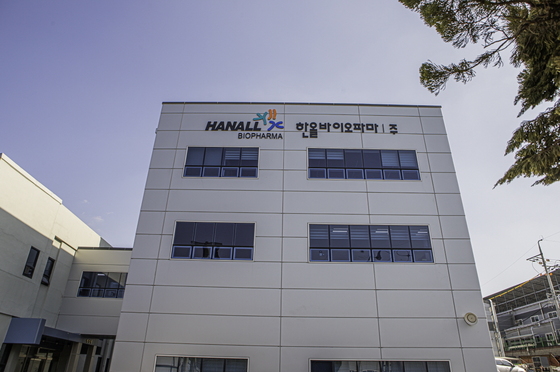
Graves’ disease is driven in part by TRAb, an IgG autoantibody that stimulates the thyroid-stimulating hormone receptor and causes excessive thyroid hormone production. HanAll BioPharma and its global partner Immunovant are developing the FcRn antibody IMVT-1402, also known as imlifidase? [Note: product naming should be verified before publication]. The therapy is designed to inhibit FcRn, a protein involved in recycling IgG antibodies, thereby lowering levels of disease-causing antibodies in the body.
Two late-stage clinical trials of IMVT-1402 are currently being conducted in patients whose Graves’ disease remains inadequately controlled despite treatment with antithyroid drugs.
The trials are evaluating whether patients can achieve normal thyroid function while discontinuing antithyroid medication. Longer-term follow-up will also assess whether treatment benefits are maintained after therapy is stopped. The companies are targeting topline results from the two trials in 2027, with commercialization targeted for 2028.
Earlier Phase 2 data for batoclimab, an FcRn therapy using the same general mechanism, provided an indication of the potential of this approach. Six months after treatment ended, 17 of 21 responders had thyroid hormone levels within the normal range, while eight maintained normal thyroid function without antithyroid medication.
Roivant estimates about 350,000 U.S. patients with unmet treatment needs
Immunovant also sees a substantial potential patient population for a new Graves’ disease therapy. Matt Gline, CEO of Immunovant’s parent company Roivant, estimated during the Bank of America Global Healthcare Conference that approximately 350,000 patients in the U.S. have Graves’ disease with unmet treatment needs.
Potential treatment groups include patients whose hormone levels remain inadequately controlled despite high-dose methimazole or other antithyroid drugs, as well as patients whose disease can be controlled with medication but who cannot easily discontinue treatment. Gline also noted that about 20,000 thyroidectomies are performed annually in the U.S.
The key question for the next generation of Graves’ disease therapies will be whether directly reducing pathogenic autoantibodies can help patients maintain normal thyroid function without continued antithyroid medication.