A recent study indicates that the effectiveness of digital therapy for temporomandibular joint (TMJ) disorders may be more closely linked to actual changes in patients’ oral behaviors than to mere app usage. This finding has sparked interest in personalized digital therapies that adjust treatment based on patients’ initial responses.
Hallym University Sacred Heart Hospital announced on Wednesday that Professor Park Sang-yoon from the Department of Oral and Maxillofacial Surgery and his team published these findings in the Journal of Medical Internet Research: mHealth and uHealth, a leading international digital health journal.
The research team included Professor Park, Professors Yang Byeong-eun and Byeon Su-hwan from Hallym University Sacred Heart Hospital, Professor Lee Sang-min from Hallym University Dongtan Sacred Heart Hospital, and visiting researcher On Seong-woon from University of California, Los Angeles’ (UCLA) School of Dentistry.
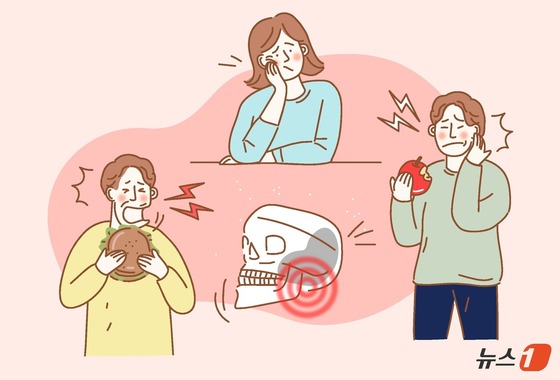
TMJ disorders involve pain or dysfunction in the jaw joint and associated muscles. Poor oral habits like teeth clenching, grinding, and excessive jaw tension can worsen or prolong symptoms.
Digital therapies, allowing patients to learn about their condition and manage jaw exercises through smartphone apps, have recently gained traction as a novel treatment approach. However, the link between actual behavioral changes and treatment effectiveness has remained unclear, as assessments primarily focused on app usage metrics.
To address this, Professor Park’s team analyzed pain reduction and oral behavior changes in TMJ patients using digital therapy. They compared app usage patterns with actual treatment outcomes.
The results showed that changes in patients’ oral behaviors were more strongly associated with pain reduction than app usage alone. The study also revealed potential for personalized digital therapy based on initial patient responses. The team analyzed data from 93 patients involved in a previous multicenter clinical trial.
Of these, 44 patients used a digital therapy app with TMJ treatment content, while 49 used a control app without treatment features. The researchers then compared treatment effectiveness by analyzing pain reductions of 30%, 50%, and 70% or more.
Analysis showed that patients using the digital therapy were about 5.4 times more likely to experience over 30% pain reduction compared to the control group. The odds of experiencing over 50% and 70% pain reduction were 3.2 and 3.5 times higher, respectively. Improved jaw movement range and reduced poor oral behaviors significantly increased the likelihood of meaningful pain reduction.
Further analysis revealed that approximately 29.1% of the total pain reduction effect correlated with changes in oral behaviors. This correlation tended to increase with stricter pain reduction criteria.
Patients showing significant oral behavior changes while using the digital therapy experienced an average pain reduction of 23.11mm (on a 100mm Visual Analogue Scale) more than those with less change. Their jaw function also improved significantly.
This translates to about a 23-point reduction in pain on a scale where 0 represents no pain and 100 represents severe pain. In contrast, app usage metrics like login frequency, exercise completion, and content engagement showed no significant correlation with behavioral changes.
The research team emphasized that the key to clinical effectiveness lies not in app usage frequency, but in how well patients translate learned content into daily behavioral changes.
Treatment duration also played a role, with digital therapy effects more pronounced at the four-week mark compared to the six-week endpoint. The team proposed personalizing digital therapy by adjusting treatment intensity and content based on initial responses and behavioral changes.

Professor Park stated that this study underscores the importance of real-life behavioral changes in treatment outcomes, rather than mere app usage. Future strategies should focus on developing precise, personalized digital therapies by closely monitoring both behavioral changes and treatment responses.
This research is expected to set new standards for evaluating digital therapy effectiveness. It serves as a follow-up to a multicenter clinical trial conducted jointly by Hallym University Sacred Heart Hospital and Hallym University Dongtan Sacred Heart Hospital, as part of a confirmatory clinical trial approved by the Ministry of Food and Drug Safety.