Yipseel, a regenerative medicine company specializing in induced pluripotent stem cells (iPSCs), has received a decision to grant a South Korean patent for its universal iPSC technology, designed to reduce immune responses. The company plans to expand cell therapy development and clinical-grade cell line supply based on its proprietary source cells and manufacturing technology.
On the 14th, Yipseel announced that it had received a decision to grant a domestic patent for “Low-Immunogenic Universal Induced Pluripotent Stem Cells.” The patent covers technology for designing and manufacturing stem cells with reduced immune responses to develop allogeneic cell therapies that can be used to treat multiple patients.
Universal iPSCs are intended to allow cells obtained from a donor to be used in treatments for multiple patients. However, immunological differences between donors and recipients can trigger immune responses, making technologies to reduce these reactions important.
Yipseel addressed this challenge by selectively regulating genes involved in immune recognition. The approach is designed to reduce the expression of HLA-A, HLA-B and HLA-DRA genes among human leukocyte antigen (HLA) genes, while ensuring that the expression of HLA-C, B2M and CIITA does not decrease relative to the parental cells.
The related research findings were published in the international journal Experimental & Molecular Medicine in March last year. The researchers reported that the stem cells retained their defining characteristics and differentiation capacity after gene editing, and that in vitro immune cell assessments produced results supporting their low immunogenicity.
The research underpinning the patent was conducted through a Scale-up TIPS project supported by the Ministry of SMEs and Startups, with the Korea Technology and Information Promotion Agency for SMEs serving as the specialized agency. Through the project, Yipseel has secured proprietary low-immunogenicity source cells and pursued development of next-generation chondrocyte therapies using them.
The company is also building manufacturing and quality systems to translate its research into products. Yipseel has secured Good Manufacturing Practice (GMP)-grade plasmids for gene editing and developed standard operating procedures for producing universal iPSCs, along with systems for genetic stability assessments and quality testing.
The company is also pursuing a cell line supply business. Last year, Yipseel signed agreements worth approximately 6 billion won, including milestone payments, to supply clinical-grade iPSC cell lines to three organizations: Asan Medical Center, Eticstem and Celloid. According to the company, its cell line supply business generated cumulative revenue of 2 billion won over the past three years.
Yipseel plans to broaden its business through cell line supply, joint research and development, contract development and manufacturing organization (CDMO) services, and technology transfers and licensing. The company aims to combine proprietary source cell technology with manufacturing processes and quality assessment capabilities to support both its own therapeutic development and cell therapy programs at other companies.
The clinical research for MIUChon, the company’s cell therapy candidate for osteoarthritis, is separate from the development of next-generation cartilage therapies using universal iPSCs. Before universal iPSC technology can lead to actual treatments, further validation will be needed to assess the characteristics of differentiated cells, immune responses, safety and efficacy.
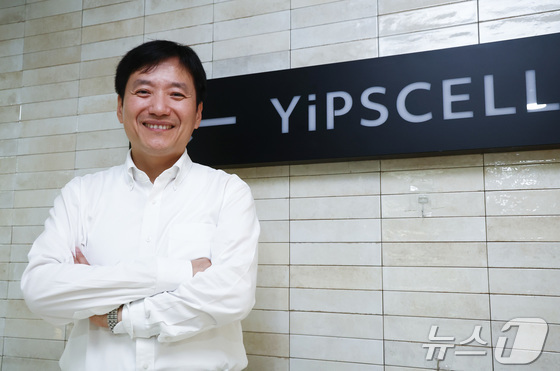
“We will expand the applications of our iPSC platform by translating our low-immunogenicity cell line technology into therapeutic development and cell line supply,” said Nam Yu-jun, vice president and Ph.D. at Yipseel.
Meanwhile, Yipseel has joined six industry, academic and research institutions, including the Catholic University of Korea, to establish an advanced biotechnology self-driving laboratory (SDL). The initiative aims to automate biological research processes, including stem cell culture, using robotics and artificial intelligence (AI). The project has a total budget of 8.25 billion won and is scheduled to run through December 2028.