

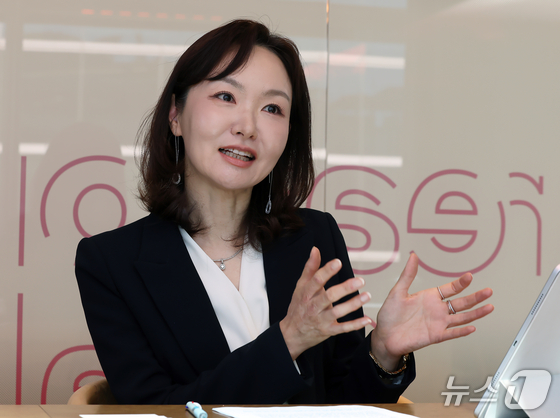
EPPE is touted as an obesity treatment tailored for Koreans, according to Kim Na-young, Vice President of Hanmi Pharmaceutical. In a recent interview with News1, she explained that it designed the clinical trials around the typical obesity patient profile in Korea, directly confirming weight loss effects and safety in this population.
As head of Hanmi’s innovation growth division, Kim has steered the entire development process of EPPE (Efpeglenatide), from its return by Sanofi to its launch as an obesity treatment. She emphasized the clinical trials’ reflection of Korean obesity patient characteristics, favorable tolerability, and patient accessibility as key competitive advantages.
Korean Trials Don’t Automatically Mean Korean-Specific… 82% with BMI Under 35
Kim’s assertion of EPPE being tailored for Koreans primarily stems from the clinical trial population. The Phase 3 trial in Korea targeted individuals with a Body Mass Index (BMI) between 27 and 35, aligning with Korean obesity standards and patient distribution.
Conducting trials on Koreans doesn’t automatically make it an optimized treatment for them, Kim clarified. What’s crucial is which patients it developed it for and what results it observed in those patients.
Approximately 30% of trial participants had a BMI under 30, while about 52% fell within the 30-35 BMI range, meaning roughly 82% had a BMI under 35. Notably, women with a BMI under 30 showed an average weight loss of 12.2%. In Korea, the proportion of obesity patients with a BMI between 25 and 30 is comparatively higher than in Western countries.
In contrast, the average baseline BMI for Wegovy STEP 1 and Mounjaro SURMOUNT-1 trials was 37.9 and 38.0, respectively, with about 60% of participants having a BMI over 35.
Kim noted that global trials primarily involved groups with moderate to severe obesity characteristics typical in Western populations. EPPE demonstrated about 10% weight loss, good tolerability, and low treatment discontinuation rates among patients commonly seen in Korea.
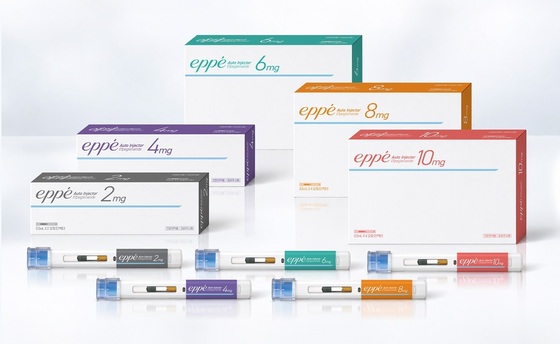
Pricing Strategy: Aiming to Reduce Treatment Abandonment
Another critical factor in EPPE’s market success will be its price point. Hanmi Pharmaceutical plans to set the supply price considering fluctuations in competing products like Wegovy and Mounjaro.
Kim acknowledged that while the cost structure prevents extremely low pricing, it aims to minimize treatment abandonment due to financial constraints, especially given this drug’s domestic development.
She added that while it’s premature to discuss specific pricing, it’s clear that patient accessibility will be the top priority.
9.75% Weight Loss: A Significant Achievement With Low Discontinuation Rate
In the Korean Phase 3 trial, EPPE showed an average weight loss of 9.75% over 40 weeks at doses up to 10 mg. About 80% of patients lost over 5% of their body weight.
Kim explained that people often fixate on comparing 20% versus 9.75%, but the patient populations, trial durations, and dosages differ. Considering all factors, 9.75% is a substantial figure.
While Mounjaro’s SURMOUNT-1 trial evaluated doses up to 15 mg over 72 weeks, in Korea, about 80% of patients received 2.5 mg or 5 mg doses.
EPPE’s Phase 3 trial revealed minimal gastrointestinal side effects, with only 2 out of 301 patients (0.66%) discontinuing treatment due to adverse effects over 40 weeks.
Kim emphasized that while it can’t claim direct superiority without head-to-head trials, the focus should be on healthy, sustainable weight loss rather than just the amount lost.
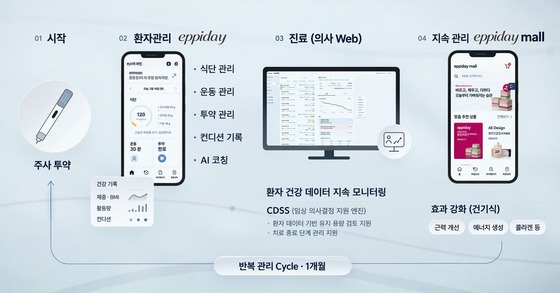
To support this holistic approach, Hanmi Pharmaceutical is developing Eppiday, a comprehensive lifestyle care platform integrating EPPE with Apple applications for diet and exercise management.
Perseverance Pays Off: EPPE’s Journey From Setback to Success
EPPE’s development continued after Hanmi Pharmaceutical reacquired it from Sanofi. Initially targeted for diabetes treatment, it was repurposed for obesity, culminating in the Korean Phase 3 trial. Concurrent Phase 3 trials for diabetes indications are also underway.
Given its tumultuous journey, Kim’s attachment to EPPE runs deep. During the interview, she likened EPPE to her own child.
Kim reflected that EPPE is more than just another drug for them. It recognized its inherent value when Sanofi returned it, which fueled the determination to prove its worth.
Kim Na-young: Vice President, Hanmi Pharmaceutical △ Born 1975 △ M.S. in Pharmacy, Ewha Womans University △ MBA, Seoul National University △ Adjunct Professor, Pharmaceutical Bioindustry, Dongguk University △ Inside Director, Hanmi Pharmaceutical △ Vice President, Innovation Growth Division, Hanmi Pharmaceutical