

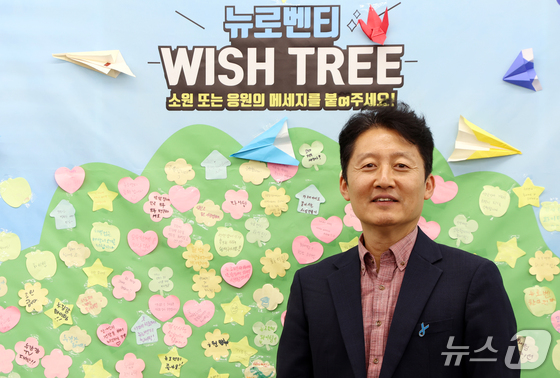
The essence of humanity lies in its diversity.
Autism spectrum disorder is one of the many facets that make up the human experience.
Our goal is to ease the daily challenges faced by individuals with autism and ensure they are respected as integral members of society.
In a recent interview with News1, NeuroVenti Chief Execuitve Officer (CEO) Shin Chan-young shared this perspective when discussing his motivation for developing autism treatments.
NeuroVenti’s research philosophy goes beyond viewing autism as a condition to be overcome. Instead, it focuses on fostering a society where individuals with diverse characteristics can coexist harmoniously.
The company is committed to developing treatments that honor the unique traits of individuals with autism while addressing the difficulties they face in social communication and daily life.
Currently, NeuroVenti is developing NV01-A02, an autism spectrum disorder treatment that simultaneously regulates serotonin and dopamine neurotransmitter systems. Recent Phase 2 clinical trials have shown promising improvements in social skills and abnormal behavior indicators. The company aims to secure global technology exports and advance to subsequent clinical trials next year.
After a decade of research, I founded this company to challenge the misconception of autism as a rare disease.
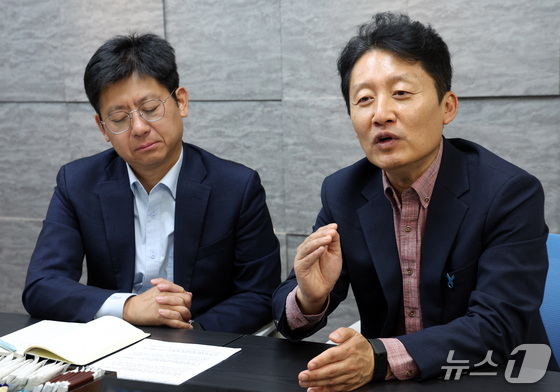
Shin’s journey into autism research began in 2006 when he joined Konkuk University’s School of Medicine faculty. He recalls that while some clinical studies involving individuals with autism were underway in South Korea at the time, there was a significant gap in foundational research that could lead to new drug development.
The field was virtually unexplored in Korea, and it saw an opportunity to make a meaningful contribution, Shin explained. After nearly a decade of studying autism and identifying drug development targets and candidate substances, he decided to launch his own company. Existing pharmaceutical companies were hesitant to take on the development, so he took the initiative.
Shin also addressed the common misconception of autism spectrum disorder as a rare disease. He clarified that autism spectrum disorder is not rare but results from a complex interplay of various genetic and environmental factors.
This complexity is precisely what makes treatment development so challenging. The wide range of causes and clinical characteristics in autism spectrum disorder means that targeting a single gene or protein is unlikely to address the multiple symptoms effectively.
Individuals with autism exhibit an incredibly diverse array of symptoms and causes, Shin noted. That’s why the drug development approach targets multiple factors simultaneously, rather than focusing on a single element.
Phase 2 trials have shown simultaneous improvements in social skills and abnormal behavior, paving the way for global Phase 3 trials.
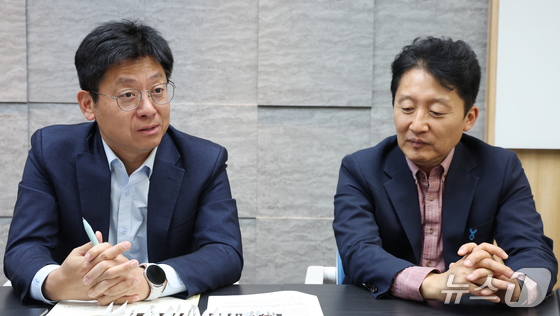
NeuroVenti’s key drug candidate, NV01-A02, employs a multi-target mechanism that acts on both serotonin and dopamine neurotransmitter systems.
Serotonin plays a crucial role in neural functions related to social behavior, while dopamine is linked to repetitive behaviors. This dual-action strategy aims to address various symptoms of autism spectrum disorder by regulating different receptors with a single drug.
Shin likened this approach to creating a master key that fits two differently shaped locks. The breakthrough lies in developing a structure that can appropriately regulate both serotonin and dopamine receptors, setting them apart from existing treatments, he explained.
According to the company, Phase 2 trials of NV01-A02 demonstrated statistically significant improvements in both social response evaluations and abnormal behavior assessments. This dual impact represents a significant milestone in autism treatment.
Buoyed by these promising results, NeuroVenti is currently in negotiations with global pharmaceutical companies across the U.S., Europe, China, and Japan for technology exports.
Several global corporations are conducting in-depth reviews of the non-clinical and clinical data. NeuroVenti aims to secure global technology exports by next year.
NeuroVenti CEO Seo Dong-cheol outlined their strategy for Phase 3 trials: It’s preparing to collaborate with partners on global technology exports while simultaneously pursuing domestic partnerships to facilitate the entry into clinical trials.
The company is exploring options to conduct Phase 3 trials in both South Korea and the U.S. The specific development strategies will be finalized based on global partnership agreements.
Beyond autism treatments, NeuroVenti is also developing candidate substances for treating resistant depression. They’re currently investigating the potential to expand indications for NV01-A02 to include social anxiety disorder and rare genetic diseases related to autism.
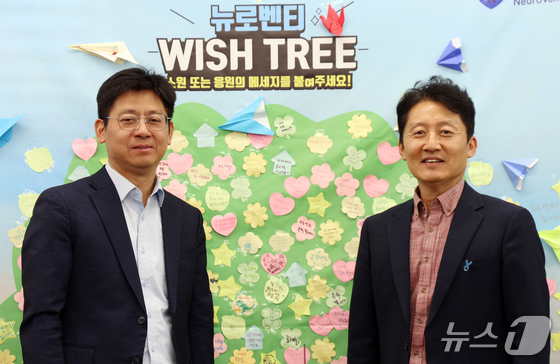
NeuroVenti is securing a revenue base for new drug development while expanding its business through the research and development (R&D) service platform ROND+.
ROND+ offers comprehensive support for evaluating drug candidate efficacy, identifying mechanisms of action, and establishing development strategies. The company emphasizes its role in collaborating on the overall design of the drug development process, going beyond simply performing requested tests.
Shin explained that while traditional research outsourcing companies might be likened to contractors building specific components, it’s involved in every aspect – from design and construction to assessing the final value. The goal is to secure all necessary data from the early stages, enhancing the competitiveness for technology exports.
The company is already seeing tangible business results. NeuroVenti reports securing 11 ROND+ contracts this year, with their client base now exceeding 20. They’re on track to meet or surpass their annual revenue target of 1 billion KRW (approximately 748,000 USD).
For biotech startups with limited funding, NeuroVenti offers a collaborative model that reduces initial research costs while sharing future profits from technology transfers.
Both CEOs emphasize that NeuroVenti’s ultimate goal is to reinvest the fruits of their drug development efforts back into society. The company regularly participates in events involving individuals with autism and their families.
Shin, in particular, participates annually in running events organized by autism-related organizations. This year, he plans to challenge himself with a half marathon. This commitment goes beyond mere sponsorship, reflecting a genuine effort to understand the realities faced by individuals with autism and their families.
Seo added that it’s leveraging the drug development capabilities to alleviate the challenges faced by individuals with autism and their families. The vision is to create a virtuous cycle where profits from new drug development are reinvested into activities that benefit the autism community.
Shin remarked that the society still harbors prejudices against autism, and it lacks sufficient environments for individuals to connect. Its hope is that it can learn to embrace differences not as flaws, but as a rich tapestry of human diversity.
He emphasized that through the work in developing autism spectrum disorder treatments, it aims to gain global recognition for South Korea’s drug development capabilities. Within a decade, it aspires to establish NeuroVenti as a competitive force in neurodegenerative disease drug development on the global stage.
◇Shin Chan-young, CEO of NeuroVenti Profile
△Graduated from Seoul National University College of Pharmacy △Ph.D. from Seoul National University College of Pharmacy △Postdoctoral researcher at Yale University △Joined Konkuk University School of Medicine as a professor in 2006 △Founded NeuroVenti in 2015 △Board member of the Korean Autism Society △Secretary-General of the Korean Society of Applied Pharmacology △Co-CEO of NeuroVenti
◇Seo Dong-cheol, CEO of NeuroVenti Profile
△Graduated from Seoul National University College of Pharmacy △Worked at Chong Kun Dang Pharmaceutical △Worked at Il Yang Pharmaceutical △Worked at Seoul Pharmaceutical △Worked at Huons △CEO of Osstem Implant △Joined NeuroVenti in 2022 △Co-CEO of NeuroVenti