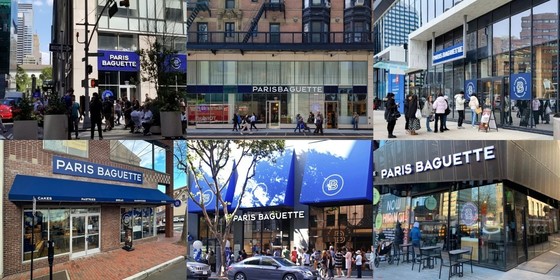
Paris Baguette has surpassed 300 locations in the United States after more than two decades since its market entry. The company is now establishing local production facilities to accelerate its North American expansion. Chairman Huh Young-in of SPC Group has been diligently working on global operations, moving beyond franchise expansion to localizing production and logistics.
According to industry sources on Tuesday, Paris Baguette launched its global business in earnest by opening its first U.S. store in Los Angeles in 2005, following its entry into China in 2004. Initially, the company focused on Korean-American communities to gain operational experience before expanding into major cities like New York’s Manhattan, Los Angeles, and Boston.
While maintaining its total bakery concept – offering cakes, croissants, pastries, sandwiches, and beverages under one roof – the company has refined its products and store operations to cater to local tastes.
The franchise model has played a crucial role in the company’s substantial growth. Paris Baguette has accelerated franchise openings by expanding multi-store development agreements while establishing robust training, quality control, and logistics systems.
As a result, the number of U.S. stores has exceeded 300 in just over 20 years. In May, the company opened its first airport location at Philadelphia International Airport, marking its expansion into specialized markets beyond traditional commercial areas.
The brand’s reputation in the U.S. franchise market is also on the rise. Paris Baguette ranked 29th overall and first in the bakery café category in Entrepreneur magazine’s 2026 Franchise 500 list. Its overall ranking has climbed from 61st in 2024 to 42nd last year, and now to 29th this year.
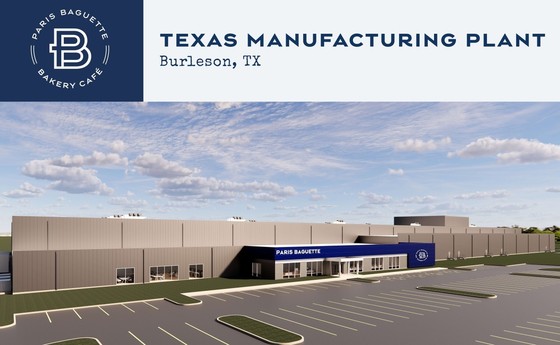
The North American operations are evolving beyond store expansion to include production and logistics localization. Paris Baguette plans to build a large-scale bakery in Texas to supply products to its North American locations. Once operational, this facility will establish a comprehensive supply chain connecting local production, logistics, and retail sales.
Securing a local production base is considered key infrastructure to support future North American expansion. As the store count grows, so does the importance of a stable supply chain. This strategy aims to enhance supply efficiency while building a foundation to respond to market changes.
As Paris Baguette expands in North America leveraging its established franchise model and local infrastructure, another South Korean brand, A Twosome Place, is also entering the U.S. market.
A Twosome Place plans to open its first U.S. store in Alexandria, Virginia, this October, initially operating as a company-owned location. The menu will feature signature items like Strawberry Chocolate Fresh Cream Cake and Spoonable Ice Box, alongside cakes incorporating dalgona, black sesame, and injeolmi, as well as bulgogi bibimbap bowls.
Looking ahead, the company aims to secure a foothold in the DMV area (Washington D.C., Maryland, and Virginia) before considering expansion into New York, New Jersey, and Atlanta.
However, the two brands differ in their U.S. market entry strategies. Paris Baguette, which entered the U.S. in 2005, has expanded its store network through franchising over the past two decades, localizing its production and logistics infrastructure to establish a stable business foundation.
In contrast, newcomer A Twosome Place is starting by validating its brand and menu’s competitiveness through company-owned stores. As Paris Baguette leverages its long-term operational experience to enter a new phase of business expansion, other South Korean bakery and café brands are also intensifying their efforts to penetrate the U.S. market.
Industry insiders note that Paris Baguette’s success over the past two decades has proven the potential of Korean bakeries in the U.S. market, positively influencing the entry of other domestic brands. By pioneering the market and creating successful case studies, Paris Baguette has paved the way for other South Korean bakery and café brands to venture into the U.S. market.