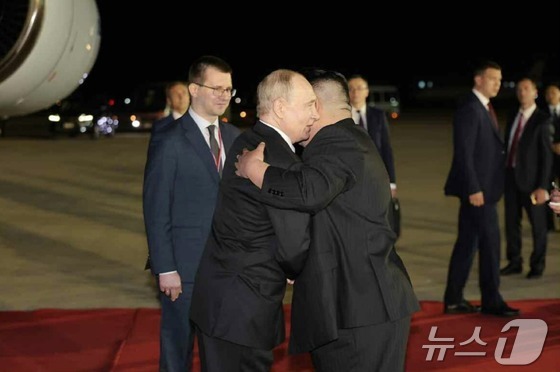
North Korean leader Kim Jong Un may visit Russia in June, possibly holding a summit with President Vladimir Putin to mark the first anniversary of the North Korea–Russia treaty signed on June 19.
On Monday, a South Korean government official stated, “We are closely monitoring the possibility of Kim Jong Un visiting Russia next month.”
Kim did not attend Russia’s Victory Day parade on May 9, commemorating the 80th anniversary of the Soviet Union’s victory in World War II. Instead, he visited the Russian embassy in Pyongyang, reaffirming the alliance’s strength and justifying North Korea’s troop deployments to support Russia.
Since Russian Deputy Foreign Minister Andrei Rudenko officially raised the prospect of a North Korean state visit in March, Victory Day had been seen as a likely window. However, analysts believe North Korea opted out of the multilateral celebration to avoid overshadowing its leader in a setting involving 29 heads of state.
Given the steady deepening of bilateral ties, it’s likely that both sides had already been preparing for a summit in June. The occasion could be used to commemorate the treaty signed on June 19, which Pyongyang and Moscow have used to legitimize military support and troop deployments.
Under Article 4 of the treaty, if either country is attacked and enters a state of war, the other must provide military and other assistance using all available means following the UN Charter (Article 51) and respective national laws.
North Korea claims that its troop deployment under this clause is not a breach of international law. On April 28, Pyongyang officially acknowledged the deployment, stating that it was based on its judgment that the current situation warranted invoking Article 4 of the “Comprehensive Strategic Partnership Treaty.”
Both countries have cited the treaty to justify their military and diplomatic cooperation. For this reason, many within the South Korean government believe they will not let the treaty’s first anniversary pass without a high-profile event.
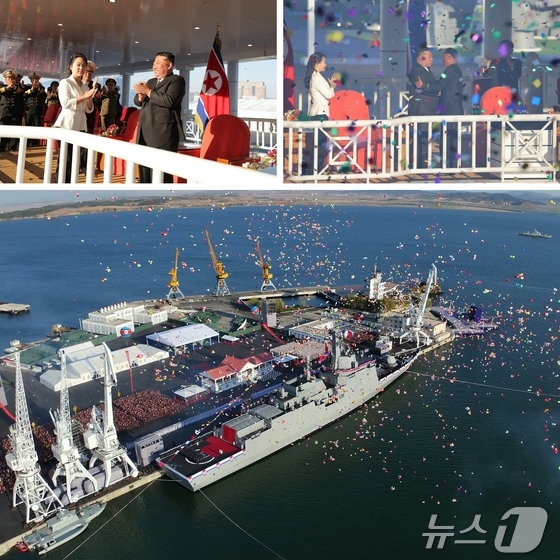
In this context, Kim’s departure from Victory Day does not indicate tension—it may signal a well-coordinated partnership. Around that time, signs of Russian technical support for North Korean military modernization continued to surface.
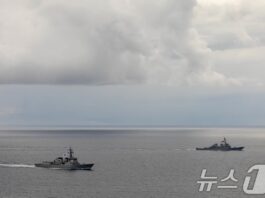
In April, North Korea tested the weapons systems on its new multipurpose destroyer, the Choi Hyun. Analysts noted that its supersonic cruise missiles and phased array radar closely resemble Russia’s Zircon hypersonic missiles and the systems used on Karakurt-class corvettes.
Further evidence emerged last week when Rodong Sinmun revealed that North Korea had conducted live-fire tests of new medium-range air-to-air missiles using MiG-29 fighters. These missiles were first displayed at the 2021 “Self-Defense-2021” arms exhibition, and now appear to have reached the integration and test phase—likely with Russian assistance. Air-to-air missile systems remain technically challenging even for South Korea, which is still in early development.
Military-focused cooperation between Pyongyang and Moscow is expected to continue, as both nations benefit strategically. North Korea sees the alliance as a means to gain in defense, diplomacy, and economic affairs. Russia, in turn, views its ties with North Korea and China as a way to counterbalance U.S. influence in the Indo-Pacific through a trilateral bloc.