Experts argue that traditional international legal criticism and moral condemnation are no longer sufficient to effect real change regarding North Korea’s troop deployment to Russia. They suggest that using North Korea’s own logic in criticizing the U.S.-South Korea alliance could be more effective in addressing this issue.
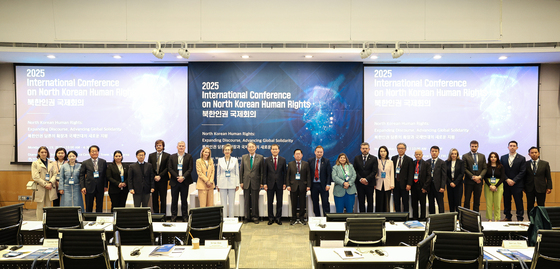
Brian Myers, a professor of international studies at Dongseo University, asserted at the Ministry of Unification’s 2025 International Conference on North Korean Human Rights held in Seoul that the Kim Jong Un regime is circumventing sanctions through its strategic alliance with Russia, limiting the impact of conventional diplomatic approaches.
Myers emphasized that the first step in holding North Korea accountable is meticulously documenting troop deployments and Russian compensation.
He projected that this evidence could be leveraged to push for secondary sanctions against entities supporting military cooperation, contribute to official United Nations (UN) condemnation of North Korea’s actions, and potentially lead to International Criminal Court (ICC) investigations.
However, Myers cautioned that even if these measures are implemented, their practical impact on North Korea might be limited, given Russia’s support as a permanent UN Security Council member.
He highlighted that decades of criticism and sanctions have failed to deter North Korea’s nuclear ambitions, and human rights conditions have not significantly improved since the UN’s 2014 declaration of systematic, widespread, and grave violations.
While underscoring the illegality of North Korea’s troop deployment to Russia, Myers acknowledged that the legal basis for criticizing this action is weaker compared to human rights issues.
Consequently, Myers advocated for psychological warfare targeting the North Korean regime’s characteristics. He explained that North Koreans have been indoctrinated to value sovereignty above all else and have long criticized South Korea as subservient to the U.S. Therefore, their involvement in a foreign conflict under Russian command could potentially lead to confusion among the populace.
Myers suggested employing the same rhetoric North Korea uses against the U.S.-South Korea alliance to criticize the regime’s mercenary cooperation with Russia. He argued that framing the deployment as a humiliating violation of North Korean sovereignty could exert symbolic and political pressure on the North Korean leader.
According to government sources, as of April 30, an estimated 4,700 of the approximately 15,000 North Korean troops deployed to the Russia-Ukraine conflict have been killed or wounded, with fatalities estimated at around 600.