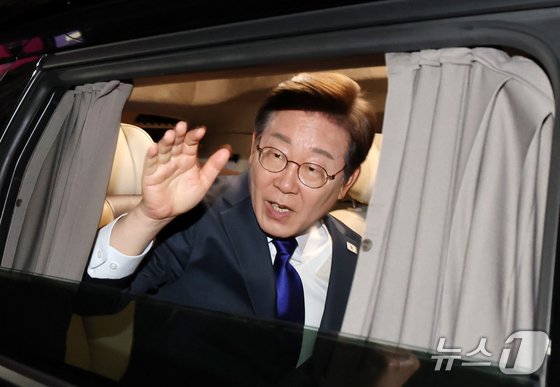
Attention is focused on how North Korea will respond to the election of President Lee Jae Myung, who has pledged to extend conciliatory gestures toward the North on June 4.
In the past three presidential elections (18th, 19th, and 20th), North Korea’s initial reports on election results have been purely factual, without revealing the regime’s official stance. Given the recent chill in inter-Korean relations, most analysts predict that there will be no significant reaction this time either.
As of the morning of June 4, North Korean state media outlets, including the Workers’ Party newspaper Rodong Sinmun and the Korean Central News Agency, have made no mention of President Lee’s election.
In the previous three elections, North Korea reported the results within three days. These reports primarily focused on factual information, such as the president-elect’s party affiliation. During the snap election triggered by former President Park Geun Hye’s impeachment, North Korea briefly mentioned the background but refrained from indicating any official positions or future direction.
Two days after the 20th presidential election held on March 9, 2022, North Korea reported through Rodong Sinmun on March 11 that “Yoon Suk Yeol, the conservative opposition candidate from the People Power Party, had been elected president by a narrow margin.”
Following the 19th presidential election on May 9, 2017, North Korea reported through the Korean Central News Agency on May 11 that the election was held due to former President Park Geun Hye’s removal from office, stating that “Democratic Party candidate Moon Jae-in had been elected as the 19th president with 41% of the vote.”
At that time, North Korea expressed its views not through state media but via Choson Sinbo, the newspaper of the General Association of Korean Residents in Japan (Chongryon). The publication stated, “This marks the end of nine years of conservative rule under Lee Myung Bak and Park Geun Hye,” and called the May snap election “the product of the candlelight revolution that ousted corrupt power.” However, this was not interpreted as the official stance of North Korean authorities.
Following the 18th presidential election on December 19, 2012, North Korea issued reports the very next day. The Korean Central News Agency reported on December 20 that “According to domestic and foreign media reports, in the presidential election held in South Korea on December 19, the Saenuri Party candidate was elected by a narrow margin after a fierce contest,” deliberately avoiding any mention of former President Park’s name.
North Korea has consistently shown restraint in reflecting any particular editorial stance in its initial reports on South Korea’s presidential elections.
Currently, North Korea maintains the “two-state” framework established during the Yoon Suk Yeol government. This suggests that the two Koreas should exist as separate nations rather than maintaining a “special relationship aimed at reunification,” apparently indicating an intention to break away from past inter-Korean relations.
For this reason, North Korea appears unlikely to make any special gestures in response to President Lee’s election. Analysts predict that North Korea’s moves will only become visible if President Lee makes official proposals for dialogue and contact with the North, or if there are changes in the trajectory of North Korea-U.S. dialogue.