

The decades-long era of nuclear weapons reduction that followed the end of the Cold War appears to be drawing to a close, with signs of a new nuclear arms race emerging.
In a report published on Sunday, the Stockholm International Peace Research Institute (SIPRI) stated that the world’s nine nuclear-armed states collectively possessed 12,241 nuclear warheads as of January 2025.
Of these, 9,614 warheads are believed to be reserved for military use. Approximately 2,100 of them are reportedly mounted on ballistic missiles and kept on high operational alert.
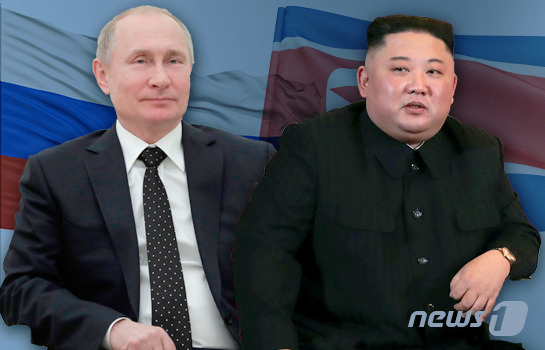
North Korea is estimated to have 50 nuclear warheads as of January, and it is believed to possess enough fissile material to produce an additional 40.
The United States and Russia remain the dominant nuclear powers, accounting for about 90% of the global stockpile. While the U.S. arsenal declined slightly, from 5,328 to 5,177 warheads, over the past year, and Russia’s from 5,580 to 5,459, SIPRI noted that both countries continue to implement large-scale nuclear modernization programs.
The think tank warned that the expiration of the New START treaty in February 2026 could lead to an increase in the number of warheads deployed on strategic missiles by both nations.
China is reportedly expanding its nuclear arsenal at the fastest rate. Since 2023, the country has added roughly 100 warheads annually, bringing its total to an estimated 600 as of January 2025.
Beijing is said to have nearly completed construction of around 350 intercontinental ballistic missile (ICBM) silos in its northern desert and eastern mountainous regions. At the current pace, the number of China’s ICBMs could approach that of the U.S. or Russia in the early 2030s.
China has nearly completed construction of about 350 intercontinental ballistic missile (ICBM) silos across its northern desert and eastern mountainous regions. At this rate, China’s ICBM arsenal could rival that of Russia or the United States by the early 2030s.
Hans Kristensen, director of the Nuclear Information Project at the Federation of American Scientists (FAS), observed that the world is shifting away from decades of disarmament toward renewed buildup, escalating rhetoric, and a breakdown in arms control efforts.
Iran, while not officially recognized as a nuclear-armed state, is categorized as a “threshold” country due to its significant stockpile of highly enriched uranium. Reports indicate that Iran has accumulated over 400 kilograms (about 880 pounds) of uranium enriched to 60%, a level approaching weapons-grade material. However, Israeli airstrikes launched on June 13 reportedly damaged several nuclear sites, including the Natanz facility, and resulted in the deaths of key nuclear scientists.