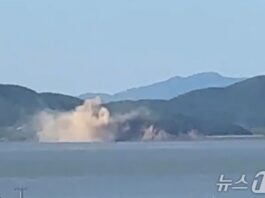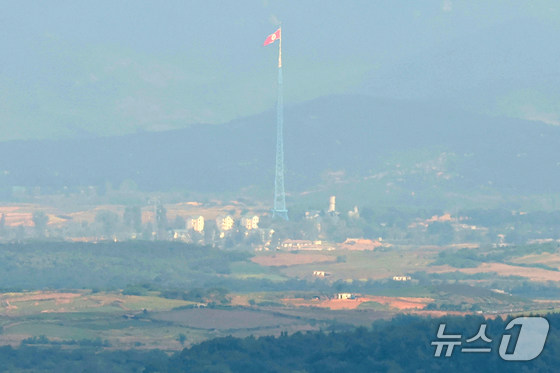
North Korea has ultimately refused to accept the remains of a resident found on Seongmodo Island, near Incheon, in late June. The South Korean government has decided to proceed with funeral arrangements for the remains, which have been classified as unclaimed. However, genetic (DNA) material will be preserved to potentially identify the deceased individual’s North Korean family members in the future.
On Tuesday afternoon, the Ministry of Unification announced that North Korea had not responded by the previously set deadline of 3:00 p.m. regarding the repatriation of the North Korean resident’s remains. The Ministry stated that in accordance with the guidelines for handling North Korean remains, it will conduct a respectful funeral following procedures established by local authorities.
Consequently, the remains, currently stored in a temporary morgue, will be treated as unclaimed and cremated, with a small portion retained in a columbarium in accordance with local regulations.
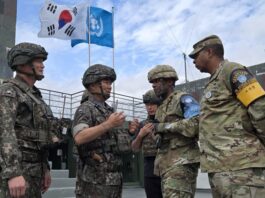
Earlier, on July 29, the Ministry of Unification publicly notified North Korea of its intention to transfer the remains of a North Korean resident, discovered on June 21, to Panmunjom (Joint Security Area) by 3:00 p.m. on Tuesday. They had agreed to wait for a response from North Korea until that time.
According to a temporary identification document found with the remains, the deceased man has been identified as Go Seong-cheol, born in October 1988. He was a farmer residing in Gangbuk-ri, Kumchon County, North Hwanghae Province.
A Ministry of Unification official stated during a press briefing that they are prepared to deliver the remains today if North Korea responds.
This marks the first instance of genetic testing being conducted on the remains of a deceased North Korean found in South Korea. This action follows a revised directive from the Prime Minister’s Office regarding the handling of North Korean remains, aimed at facilitating the future identification of family relationships for North Korean residents.
Previously, the Ministry of Unification had only conducted genetic testing for separated families. However, the revised directive has expanded this practice to include the remains of North Korean residents found in South Korea, reflecting a humanitarian approach and recognition of human rights.