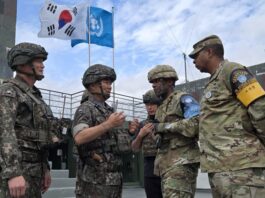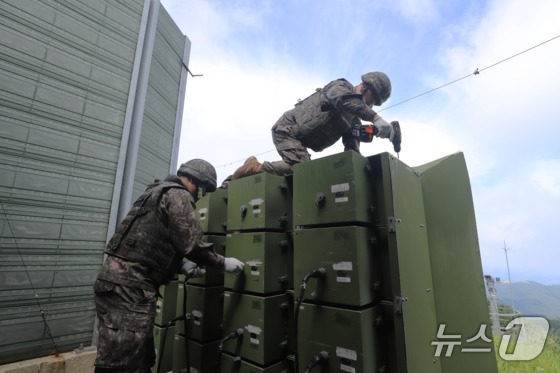
The Lee Jae-myung administration is swiftly implementing proactive measures to ease tensions between North and South Korea. These measures include controlling the distribution of anti-North Korean leaflets, halting and dismantling loudspeaker broadcasts targeting the North, fully approving private contacts with North Korea, and reviewing the repatriation of long-term prisoners. Although the administration has proposed adjusting the tone of joint military exercises—which require consultation with the U.S.—there has been no noticeable response from North Korea. On Tuesday, critics pointed out that the government should not only take such measures but also wait for a response from the North.
Lee Administration Pushes Forward with Conciliatory Policies in Its First Two Months… Yet No Real Response from North Korea
The Ministry of Unification publicly informed North Korea on July 29 that it would transfer the remains of a North Korean resident found on June 21 near Seongmodo Island in Ganghwa Island through the Panmunjom (Joint Security Area) border crossing at 3:00 p.m. that day.
However, North Korea had not responded by the scheduled transfer date. Given North Korea’s continued indifference to the Lee administration’s gestures toward improved relations, the transfer of the remains is likely to fall through.
Since taking office, the Lee administration has concentrated on proactive measures to reduce tensions with North Korea. Just five days after its inauguration on June 9, the administration requested civic groups to cease the distribution of anti-North Korean leaflets. On June 11, the military halted loudspeaker broadcasts at the front line that had been ongoing for over a year. Last month, the National Intelligence Service also ended its anti-North Korean radio and television broadcasts, which had been part of a psychological warfare campaign against the North for 52 years.
In addition, the Ministry of Unification has taken steps to restore inter-Korean exchanges by abolishing internal guidelines for accepting reports on contacts with North Korean residents and by considering the promotion of individual tourism to North Korea.
Reports indicate that discussions are underway to adjust the tone of the upcoming joint military exercises scheduled for this month. Since this matter requires coordination between South Korea and the U.S., some argue that such adjustments are inappropriate given the ongoing military threats from North Korea.
North Korea appeared to respond to the cessation of loudspeaker broadcasts by reducing its own noise broadcasts aimed at the South. However, there has been no significant visible response to the government’s subsequent conciliatory gestures. Some analysts contend that North Korea selectively opts for responsive measures that serve its own interests rather than offering genuine responses.
Hasty Concessions Toward North Korea Are Not the Answer… A Solid Foundation of Cooperation with the U.S. Is Essential
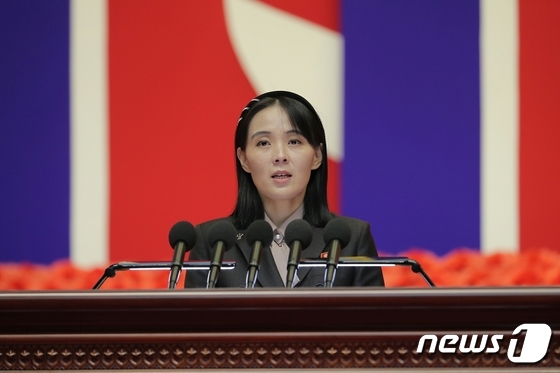
While the Lee administration remains committed to implementing all possible proactive measures toward North Korea, the North shows no willingness to engage in dialogue. North Korea declared that the inter-Korean relationship is one of hostile nations by the end of 2023. In a statement made on July 28, Kim Yo-jong, Deputy Director of the Workers’ Party of Korea, described the Lee administration as being similar to the previous government despite its conciliatory policies.
She emphasized that regardless of the policies established or proposals made in Seoul, North Korea has no interest and sees no issues to discuss, reiterating its refusal to sit at the negotiating table.
Consequently, a cautious perspective towards the Lee administration’s unilateral conciliatory policies is emerging. Experts believe that, despite the ongoing conciliatory stance, the pace of these actions needs to be tempered.
Park Won-gon, a professor specializing in North Korean studies at Ewha Womans University, commented that the current government’s North Korea policy has not yet been fully established, and these proactive measures are being implemented too hastily. He added that it needs to review the policies, establish a strategic direction, and then roll out practical measures instead of acting impulsively.
In the political arena, critics warn that pursuing an independent North Korea policy without cooperation from the U.S. could result in a repeat of the half-baked outcomes seen during the Moon Jae-in administration.
An opposition member remarked that the results of dialogue without U.S. support were evident during the Moon Jae-in administration. Further highlighting that it is naive to assume that if it changes first, North Korea will follow suit. Additionally, members of the People Power Party, who serve on the National Defense Commission, issued a statement the previous day asserting that dismantling loudspeakers aimed at the North will lead to a recurrence of the balloon incident and the destruction of inter-Korean liaison offices.
Professor Park further added that it is highly unlikely that North Korea will engage in dialogue at this time, so strengthening the South Korea-U.S. alliance is paramount. Through Kim Yo-jong’s two statements, North Korea has been attempting to divide South Korea and the U.S., leaving the door open only for dialogue with the U.S. He emphasized the South Korean government must coordinate with the U.S. to align on policy direction and proceed cautiously together.