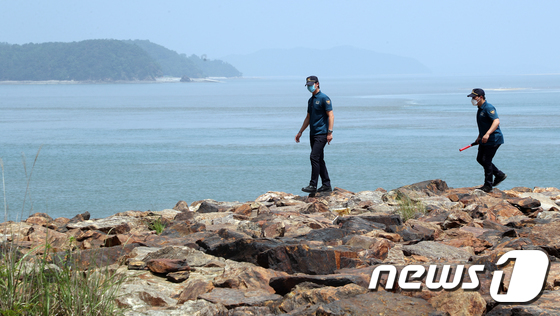
A body discovered on Seongmodo Island in Incheon last June was found with a temporary certificate bearing the name of a North Korean resident. The fact that a North Korean citizen possessed a temporary certificate suggests that the individual may have encountered an accident while relocating from their original residence to a new area.
According to multiple North Korean defectors on Wednesday, temporary certificates in North Korea are issued when citizens lose their identification cards, are in the process of obtaining new ones after moving, or need to verify their identity when dispatched to other regions. These certificates are equivalent to South Korea’s resident registration certificate.
The temporary certificate found with the deceased identified him as Ko Seong-cheol, a male born on October 20, 1988. He was listed as a farm worker residing in Gangbuk-ri, Kumchon County, North Hwanghae Province. Military winter uniforms and markings were also found among his belongings.
Kim Il-hyuk, who defected from North Korea in 2023, explained that these certificates can be obtained from the Citizen Registration Office. He noted that North Koreans typically do not carry identification when within their registered area, suggesting that Ko was away from his residence for unknown reasons at the time of the incident.
North Koreans are required to carry identification when traveling outside their registered address. This implies that Ko likely did not meet his fate in his home area. Notably, Kumchon County is located inland, far from the inter-Korean border and disconnected from Ganghwa Island where the body was found.
The presence of military uniforms among Ko’s belongings could indicate that he kept his military attire after discharge. While North Korea generally restricts the civilian use of military uniforms, defectors have noted that impoverished individuals often continue to wear durable military clothing.
Kim In-tae, a senior researcher at the Institute for National Security Strategy, stated that second-hand military uniforms are commonly traded in areas with a high military presence. Civilians often remove official insignia and wear these garments as everyday uniforms.
Kim Il-hyuk added that those facing economic hardship often wear their military uniforms long after discharge, with well-maintained uniforms lasting up to a decade or more.
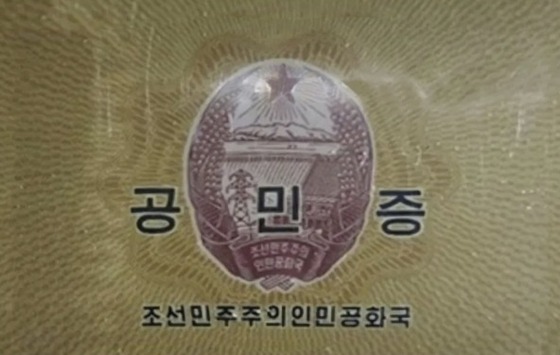
North Korean Citizens’ Certificate: Revealing Social Stratification
North Korean citizens are issued a citizen’s certificate similar to South Korea’s resident registration certificate. These cards contain personal information, including name, age, gender, birthplace, residence, occupation, and military service status. The Ministry of Social Security, which functions as North Korea’s police force, manages citizen registration. This registration is crucial for accessing education, changing residences, or obtaining employment. Interestingly, Pyongyang residents receive special Pyongyang Citizen Cards, highlighting the social divide between the capital’s inhabitants and those from other regions.
In 2018, authorities began implanting microchips into Pyongyang Citizen Cards. By 2019, this practice had extended to all citizen identification cards nationwide. The registration process for both types of cards involves fingerprinting, photography, and blood tests.
Alongside the citizen registration system, North Korea operates a separate resident registration system known as the resident understanding system. This system records detailed personal and family histories, serving as a means of population control and social classification.
Unlike the citizen certificate system, this parallel system lacks a legal foundation. It appears to systematically investigate and document the past activities of individuals and their families, categorizing residents into social strata. The population is broadly divided into three groups: basic masses, complex masses, and hostile masses, with further subdivisions within each category.
A 2017 study by the Judicial Policy Research Institute revealed that the ruling elite comprises the basic masses, while most citizens fall into the complex masses category. Those deemed oppositional to the regime are classified as the hostile masses.