On October 10, U.S. military and intelligence officials disclosed that while some restrictions on sharing North Korean intelligence remain in place, information cooperation continues across various domains, including missiles, conventional forces, cyber operations, and counterintelligence.
Military analysts suggest that while information-sharing channels regarding North Korea’s military actions remain open between the U.S. and South Korea, intelligence exchange about North Korea’s nuclear development may be limited.
Military Acknowledges U.S. Intelligence Sharing Restrictions on North Korea But Maintains Robust Readiness Posture
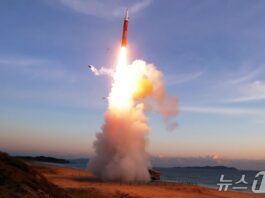
The Pentagon emphasized that recent reports claiming the U.S. has halted intelligence sharing except for North Korean missile launch data are inaccurate. Officials assert that there are no restrictions on U.S.-South Korea intelligence sharing critical to maintaining a strong military posture against North Korea.
The partial limitation of North Korea-related intelligence sharing between the U.S. and South Korea was confirmed during a National Assembly Defense Committee audit of the Joint Chiefs of Staff (JCS) on October 8.
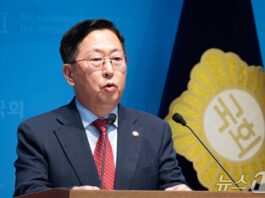
When asked about potential issues with sharing information on North Korean missile launch indicators and trajectories, JCS Chairman Gen. Jin Young-seung stated that the systems are compatible. Information is being shared.
Responding to concerns about preparedness given U.S. intelligence sharing limitations, Gen. Jin assured lawmakers that they’re not in a situation where it can’t share critical information about imminent threats or developing situations.
U.S. Intelligence Sharing Restrictions Traced to Unification Minister’s Comments on North Korean Nuclear Facilities
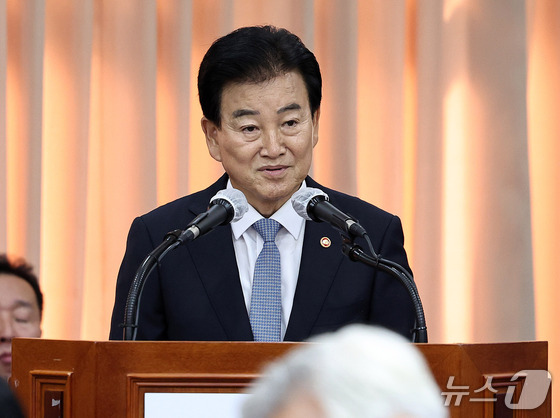
Analysts believe the U.S. partially restricted intelligence sharing following comments by South Korea’s Unification Minister about North Korean nuclear sites.
On March 6, Minister Jeong identified North Korean uranium enrichment facilities in Yongbyon, North Pyongan Province, and Gangseon (Nampo), South Pyongan Province, during a National Assembly committee session.
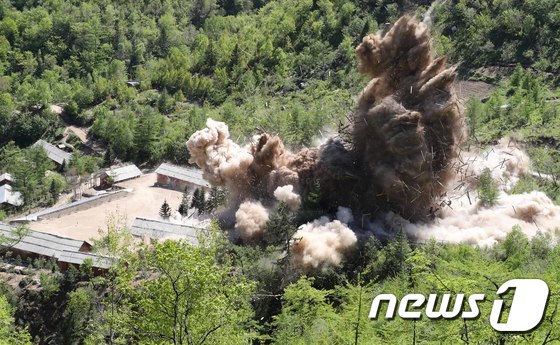
The U.S. viewed Minister Jeong’s mention of a facility in Guseong, North Pyongan Province, as a leak of sensitive information, leading to a halt in some intelligence sharing, particularly regarding U.S. satellite imagery and analysis of North Korean sites.
The Unification Ministry emphasized that information about the Guseong uranium enrichment facility had already appeared in U.S. think tank reports, citing a 2016 Institute for Science and International Security (ISIS) report, a 2024 interview with Dr. Bruce Bennett, and a 2025 Center for Strategic and International Studies (CSIS) report.
Before Minister Jeong’s public mention of Guseong, the South Korean government and the International Atomic Energy Agency (IAEA) had only referred to Yongbyon and Gangseon as North Korean uranium enrichment sites, without officially acknowledging the Guseong facility.
South Korean Intel Agency Acknowledges U.S. Restrictions, Omits Mention of North Korean Nuclear Program
The National Intelligence Service (NIS) confirmed on October 11 that the U.S. has partially limited intelligence sharing on North Korea but didn’t mention North Korea’s nuclear development trends in areas where information exchange continues.
The NIS stated that active information cooperation continues in various fields, including North Korean missiles and conventional forces, regional trends, international relations, cyber operations, and counterintelligence, apart from specific areas subject to the confirmed sharing restrictions.
During a National Assembly audit, JCS Chairman Gen. Jin Young-seung addressed concerns about sharing critical North Korean nuclear intelligence with the U.S., saying that some information is restricted, but it doesn’t impact our readiness. It’s working to resolve this situation quickly.
The Defense Ministry asserted that any gaps in shared intelligence are being filled by South Korea’s significantly enhanced independent intelligence capabilities.
The South Korean military has been bolstering its ability to independently detect and monitor North Korean nuclear and missile threats by acquiring military reconnaissance satellites.
Since 2013, South Korea has acquired five military reconnaissance satellites through the 425 Project, completing their operational deployment in April. This initiative has reduced reliance on U.S. assets and strengthened independent surveillance capabilities against North Korea.
Last December, South Korea launched the Arirang 7 multipurpose satellite, capable of 30-cm resolution Earth observation. While separate from military satellites, it showcases advancements in domestic space technology.
To further enhance its surveillance capabilities, the military plans to develop and launch over 20 small satellites and about 40 microsatellites by 2030, along with a domestic solid-fuel space launch vehicle.