The government announced on Tuesday that it has confirmed no abnormalities for the second consecutive month following regular monitoring. This comes amid concerns that wastewater from North Korea’s uranium refinement plant is contaminating the West Sea.
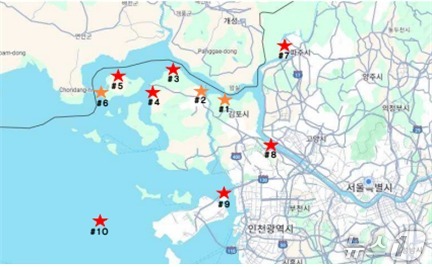
On that day, the Ministry of Unification, the Nuclear Safety and Security Commission, the Ministry of Oceans and Fisheries, and the Ministry of Environment released results from samples collected in early August. The samples were taken from seven key locations, including the northern tip of Ganghwa Island, the estuaries of the Han and Imjin Rivers, and the Incheon coastline.
According to the government, uranium and five heavy metals (cadmium, arsenic, mercury, lead, and hexavalent chromium) were either undetected or confirmed to be below the standard levels when compared to water quality pollution testing criteria, mirroring last month’s results.
Furthermore, the government reported that Incheon City independently conducted a special uranium survey from July 23 to August 2. This survey, which included the Ganghwa area, revealed no abnormalities at all 11 investigation sites.
Previously, on July 18, the government conducted its first joint investigation in response to public concerns regarding wastewater from the Pyongsan uranium plant. They decided to carry out and announce such investigations on a monthly basis for the foreseeable future.
The government stated that to swiftly assess the potential environmental impact of the Pyongsan uranium refinement plant’s wastewater, it will continue monitoring the relevant sites for the time being.