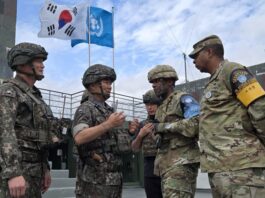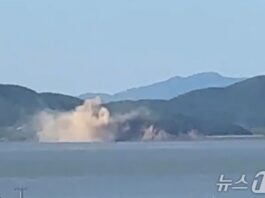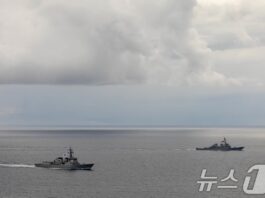
North Korea has denounced the joint exercise between the U.S. and South Korean Marine Corps as an extremely reckless and deliberate military provocation that heightens tensions on the Korean Peninsula.
On Friday, the Rodong Sinmun, the official organ of the Workers’ Party of Korea, published an article titled, What is the purpose of the U.S.-South Korea joint marine exercise?, in which it made this claim.
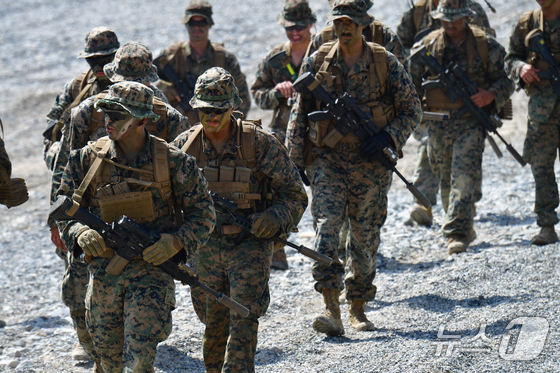
The newspaper reported that the exercise involved the U.S. Marine Corps stationed in Okinawa, the South Korean Marine Corps, and aviation units, and since July, simultaneous maneuvers—including landing drills, parachute drops, urban combat drills, and live-fire exercises—have been carried out in various regions of South Korea. It further noted that from July 31, landing exercises were conducted in Pohang, North Gyeongsang Province using armored vehicles and various direct-attack helicopters.
It went on to claim that the purpose of the U.S. conducting joint training with the South Korean Marine Corps is to enable an amphibious landing assault on North Korea’s coastal strongholds, asserting that the training content includes surprise attacks and unjust strikes on North Korea’s critical targets.
The newspaper pointed out that this provocative incident was carried out ahead of the regular U.S.-South Korea joint exercise, Ulchi Freedom Shield (UFS), thereby further highlighting the gravity of the situation.
Finally, the newspaper added that this clearly confirms that the culprits driving the dangerous situation on the Korean Peninsula and in the regional security environment are none other than the U.S. and its followers.
Previously, on August 6, both the U.S. and South Korean Marine Corps announced that they had been conducting the Korea Marine Exercise Program (KMEP) joint exercise at locations including Gimpo, Ganghwa, Pohang, Pocheon, and Dongducheon since mid-July. The KMEP is a U.S. Marine Corps deployment exercise on the Korean Peninsula designed to enhance the joint operational capability and interoperability of the U.S. and South Korean Marines.