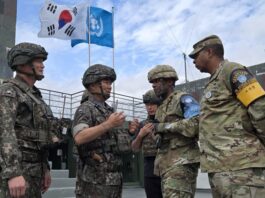
North Korea has recently shown restraint in high-intensity provocations during the U.S.-South Korea joint military exercises. This behavior is believed to be influenced by the U.S.-South Korea summit, with North Korea displaying a marked difference in its approach toward the two nations. As of Monday, analysts suggest that North Korea’s primary focus is on President Donald Trump’s strategy regarding the Korean Peninsula.
Carrying Out Low-Intensity Military Provocations While Controlling the Level of Response… Verbal Bombs Aimed at South Korea
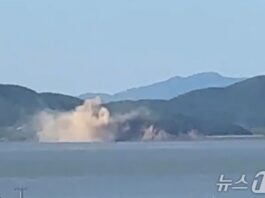
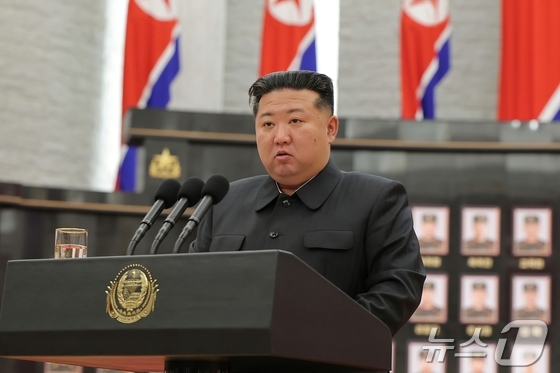
On August 23, North Korea carried out firing drills for two types of enhanced anti-aircraft missiles under the observation of Kim Jong Un, the General Secretary of the Workers’ Party. However, this information was not published in the party’s official newspaper, Rodong Sinmun. This omission appears intended to prevent citizens from becoming overly alarmed and to avoid fostering an excessively aggressive atmosphere within North Korea.
Given that anti-aircraft missiles are primarily defensive weapons, some experts interpret these drills as precautionary measures against potential U.S. and South Korean threats, rather than as direct provocations.
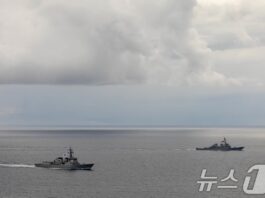
This marks Kim’s second military-related activity during the joint exercises. On August 18, the first day of the U.S.-South Korea drills, he visited the new 5,000-ton destroyer Choe Hyon-ho but refrained from significant provocations such as missile launches or firing drills.
Historically, North Korea has condemned U.S.-South Korea joint exercises as invasion war drills, responding with ballistic missile tests and nuclear provocations. However, recent trends indicate a more subdued approach toward these exercises.
Nevertheless, verbal bombs aimed at South Korea continue. Recently, North Korea has referred to President Lee Jae-myung simply as the ruler of South Korea, often omitting his formal title. On August 20, Kim Yo-jong, deputy director of the Workers’ Party, asserted that President Lee lacks the stature to change history, declaring that South Korea’s policy on North Korea is ineffective and that there are no intentions to engage in dialogue with Seoul.
The Korean Central News Agency also dismissed the recent South Korea-Japan summit—which emphasized U.S.-South Korea-Japan cooperation—as a diplomatic farce stemming from Seoul’s anxiety and an attempt to alleviate misunderstandings in Washington.
Following the U.S.-South Korea summit, North Korea is expected to establish its external strategy during the upcoming 9th Workers’ Party Congress.
North Korea, however, is demonstrating a cautious attitude toward the U.S. In a statement on July 29, Kim Yo-jong reaffirmed the existing relationship between President Trump and Kim. She indicated that dialogue would only be possible if the U.S. recognizes North Korea as a nuclear power, effectively setting a precondition for talks.
North Korea is likely to closely monitor President Trump’s remarks following the U.S.-South Korea summit. As the first statement after Kim Yo-jong’s comments and with U.S. North Korea policy yet to be formalized, it could provide crucial insights.
North Korea plans to hold its Workers’ Party Congress—a quinquennial event—either later this year or early next year. The regime needs to carefully assess U.S. and South Korean strategies in order to calibrate its foreign policy stance.
Consequently, North Korea is expected to avoid provoking the U.S. and will likely continue monitoring the situation until the conclusion of the U.S.-South Korea summit.
Park Won-gon, a professor at Ewha Womans University, stated that under the current circumstances, North Korea aims to avoid provoking the U.S., particularly President Trump. Further noting that they recognize that strong military provocations at this juncture could lead to an intensified focus on condemnation or denuclearization at the summit, hence their restrained approach.