North Korean leader Kim Jong Un inspected the performance of unmanned armed equipment from the Venus series and emphasized the importance of modernizing the military.
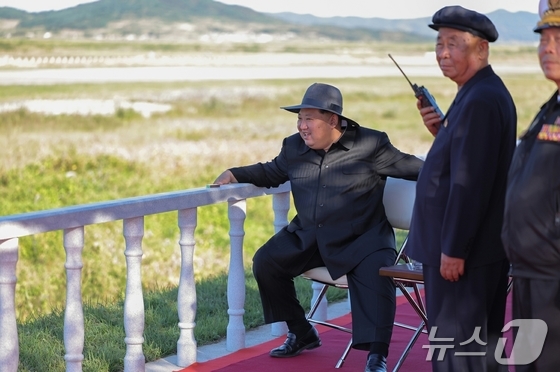
The Workers’ Party’s official newspaper, Rodong Sinmun, reported on September 19 that the previous day Kim visited research institutes and companies within the unmanned aerial technology consortium to oversee performance tests of unmanned armed equipment.
According to the newspaper, Kim evaluated the performance and combat applicability of various unmanned armed systems, including strategic and tactical reconnaissance drones and multipurpose unmanned aerial vehicles developed and produced at these facilities.
The newspaper noted that the tests clearly demonstrated the military strategic value and innovative performance of the unmanned strategic reconnaissance drone, as well as the excellent combat effectiveness of the Venus series tactical unmanned attack drones, with Kim reportedly expressing satisfaction with the results.
Kim stated that the increasing role of unmanned equipment in modern warfare, now a primary military asset, underscores the critical need to enhance core technologies in this field and to advance the artificial intelligence (AI) and operational capabilities of unmanned armed systems as a top priority in our military modernization efforts.
He also stressed the necessity of rapidly developing newly introduced AI technologies and tackling strategic issues in the expansion of drone production capabilities. Additionally, Kim approved an important plan to further enhance the technological potential of the unmanned aerial technology consortium, although specific details were not disclosed.
Key officials from the Party Central Committee, including Ri Pyong-chol, the chief advisor on military policy, and defense science research personnel accompanied Kim during this inspection.
Notably, this marks the first time Kim has referred to the Venus series in relation to unmanned aerial vehicles.
Kim had previously provided on-site guidance at the unmanned aerial technology consortium in March and observed performance tests of suicide drones in August and November of last year.
North Korea’s focus on unmanned aerial technology and modern warfare likely stems from the experiences of Russian forces extensively using drones during the Ukraine conflict.
North Korean Suicide Drones Appear to Incorporate Basic Shape Memory AI
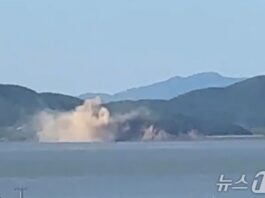
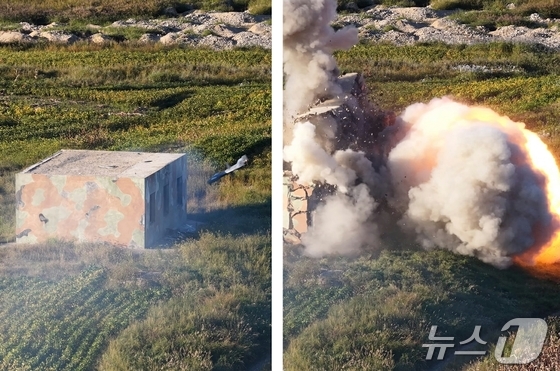
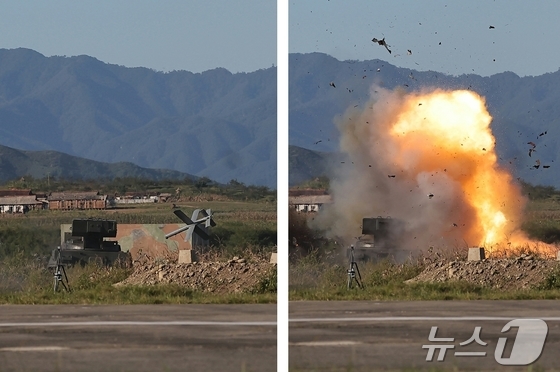
Photos released by the newspaper captured two types of suicide drones striking targets and exploding.
Analysts suggest that North Korea’s decision to publicly reveal the shapes and destructive capabilities of its suicide drones without censorship is intended to showcase its drone development technology.
Representative Yoo Yong-won, a member of the Defense Committee from the ruling People Power Party and a former military journalist, believes that North Korea’s version of the HERO suicide drone, which targets sophisticated U.S. military striker assets, likely incorporates rudimentary shape memory AI.
The unmanned vehicles unveiled resemble the previously disclosed Russian Lancet-3 and HERO-30 drones, as well as the Israeli Harop drones with ray-like wings.
Some experts suggest that the change in the paint scheme from earlier reveals indicates that these drones are intended for actual combat use.
Hong Min, a senior research fellow at the Korea Institute for National Unification, explained that previously, white paint indicated experimental use, while the camouflage paint observed today suggests these are combat-ready models.
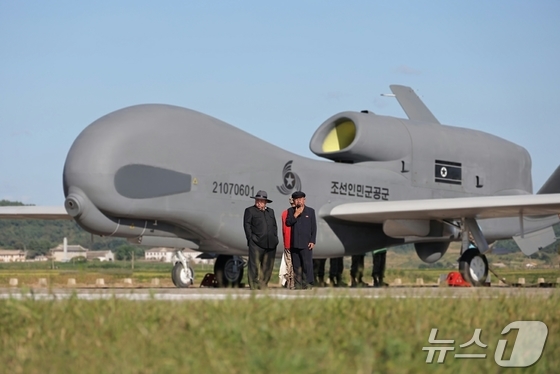
The photos also featured the strategic unmanned reconnaissance aircraft Saebyul (Shining Star)-4, often referred to as North Korea’s version of the Global Hawk.
Hong noted that the strategic and tactical unmanned reconnaissance aircraft mentioned in the newspaper refers to the existing Saebyul model. Further, by designating the suicide drones as Venus and categorizing them as tactical unmanned attack drones, North Korea is signaling an intention to differentiate between strategic and tactical systems.
Experts are closely monitoring North Korea’s efforts to integrate AI into military technology. As this year marks the final year of the five-year defense development plan, analysts predict that AI drone development may feature prominently in the upcoming defense strategy.
Hong forecasts that Kim’s hands-on verification of unmanned vehicle achievements and his subsequent approval of the next defense plan suggest that he will likely evaluate the outcomes of the five-year defense plan before the 80th anniversary of the Party’s founding. Related content will probably be incorporated into the next defense development plan, to be presented at the 9th Party Congress early next year.
Professor Lim Eum-chul from Kyungnam University’s Institute for East Asian Studies stated that the newly revealed Venus series signals a stage of AI integration, suggesting improvements in autonomous operational capabilities. Further noting that this indicates that North Korea’s drone development is evolving from imitation to self-enhancement.