North Korean leader Kim Jong Un’s recent mention of newly acquired secret weapons at the Mansudae Assembly Hall in Pyongyang during the Supreme People’s Assembly has sparked widespread speculation about their nature. The upcoming military parade on October 10, marking the 80th anniversary of the Workers’ Party, is anticipated to be a showcase for these covert armaments.
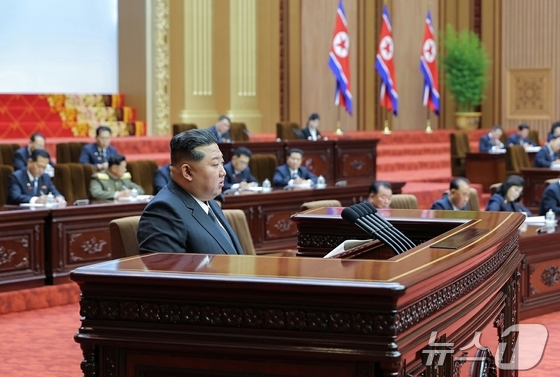
According to Rodong Sinmun‘s report on Monday, Kim declared during his address at the 13th session of the 14th Supreme People’s Assembly at the Mansudae Assembly Hall in Pyongyang that they have newly acquired secret weapons and achieved significant results in defense science research.
While Kim didn’t elaborate on the specifics of these secret weapons, analysts are focusing on the possibility of their connection to the new Hwasong-20 intercontinental ballistic missile (ICBM), which North Korea has hinted at unveiling. On September 8, North Korea conducted a ground test of a high-power solid-fuel engine using carbon fiber composites, with Kim indicating its intended use in the yet-to-be-revealed Hwasong-20.
Eom Hyo-sik, Secretary-General of the Defense Security Forum, observed that Kim has personally overseen the development of major weapons systems. The mention of secret weapons likely indicates that previously referenced systems have reached a significant stage of completion. Eom added that this could be a demonstration of advanced systems like the Hwasong-20, an evolution of the Hwasong-19.
Historically, North Korea has launched ICBMs within 1-4 months of announcing new engine developments. The inaugural test launch of the Hwasong-20 could coincide with the party’s founding anniversary parade, potentially featuring the actual missile and its transporter erector launcher (TEL).
However, given that Kim has previously acknowledged the Hwasong-20’s existence, it may not qualify as a secret weapon. This has led to speculation that North Korea might be developing unconventional weapon systems that defy conventional expectations, regardless of their actual capabilities or strategic value.
Eom further commented that while multi-warhead ICBMs, hypersonic missiles, and nuclear-powered submarines could be candidates for these secret weapons, it’s unlikely that North Korea has developed an entirely new, unprecedented weapon system.
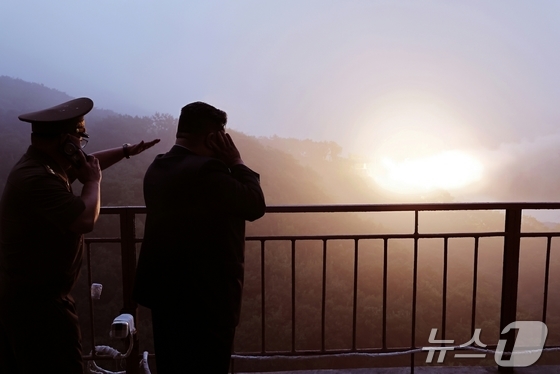
North Korea has a history of labeling certain weapons as secret. A notable example is the underwater nuclear drone Haeil, unveiled in 2023. Pyongyang claimed to have conducted over 50 final-stage tests for this weapon over two years, with Kim personally overseeing 29 of these tests.
A military insider suggested that the term secret weapons could be an internal message to showcase new achievements. North Korea might unveil these weapons to coincide with major international events, potentially escalating tensions during diplomatic gatherings like the Asia-Pacific Economic Cooperation (APEC) summit, even if not at the military parade itself.
Some analysts propose that the secret weapons rhetoric aims to sow confusion and anxiety internationally. Kim Dae-young, a researcher at the Korea Research Institute for National Strategy, noted, from North Korea’s perspective, even suicide drones or hypersonic missiles could be labeled as secret weapons. Further, this may be more about repackaging existing capabilities as ‘secret’ to maintain strategic ambiguity rather than introducing genuinely new weapons.
Experts anticipate that the true nature of these secret weapons, or whether they remain classified, will become clear during the October 10 parade. Currently, North Korea is conducting extensive parade rehearsals near Mirim Airport in Pyongyang, with satellite imagery capturing significant personnel and equipment movements.
Historically, North Korea has used military parades to showcase its latest weaponry. Following China’s recent display of new ICBMs like the Dongfeng (DF)-61 and submarine-launched ballistic missiles (SLBMs) such as the Julang (JL)-3 during its Victory Day parade on the 3rd, North Korea is expected to make a similarly impressive show of military might.
A U.S. military official stated that U.S. and South Korean intelligence agencies are closely monitoring and analyzing North Korean weapons development trends.