Analysts on Thursday report that North Korea is maneuvering to bring Vietnam into a new diplomatic balance between its two major patron powers, China and Russia.
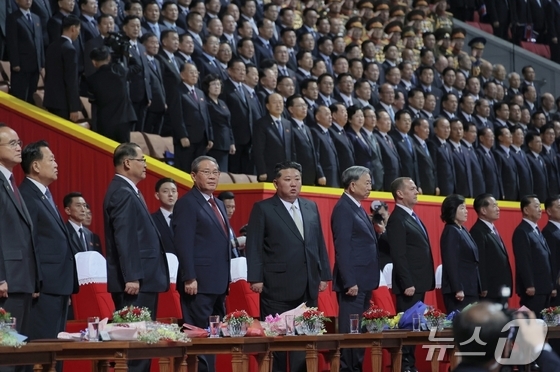
The U.S.-based North Korea-focused media outlet 38 North highlighted the protocol order revealed during the 80th anniversary celebration of the Workers’ Party held in Pyongyang from October 9 to 10. Kim Jong Un, the General Secretary of the Workers’ Party, seated Vietnam’s top leader, Communist Party General Secretary To Lam, to his left instead of Chinese Premier Li Qiang, North Korea’s blood ally. This seating arrangement is seen as a significant indicator of North Korea’s changing stance. In Asian diplomacy, the left side of the host is traditionally considered the seat of honor.
Throughout the event, Premier Li stood to Kim’s right, while Dmitry Medvedev, Russia’s second-in-command and Deputy Chairman of the Security Council, attended the event next to Secretary Lam. Vietnam was effectively treated as the primary foreign guest.
38 North interpreted this as Kim’s intention to engage Vietnam as a fourth axis in North Korea’s diplomacy. This move is seen as an attempt by North Korea to secure diplomatic autonomy and broaden its leverage for regime survival, even while under the influence of China and Russia.
Recently, Kim has been pursuing a North Korean-style multilateral balanced diplomacy with the support of Russian President Vladimir Putin and Chinese President Xi Jinping. The arrangement of foreign guests at the party’s anniversary demonstrates that this balanced diplomacy is not solely dependent on China and Russia.
38 North stated that Vietnam conveys the message that socialism can survive within the global trade order and that modernization does not equate to surrender, suggesting that North Korea may look to Vietnam as a future model for national development.
They added that North Korea became reliant on China due to the famine in the 1990s and became entangled with Russia amid the Ukraine war in the 2020s. In contrast, Vietnam successfully joined Association of Southeast Asian Nations (ASEAN) and established defense agreements with the U.S. while maintaining strong Communist Party power. It seems that North Korea aspires to achieve this kind of balance.
North Korea’s treatment of Vietnam can also be interpreted as an acknowledgment of Vietnam’s reform model, Đổi Mới, which has enabled rapid economic growth under a one-party Communist regime. This perspective is drawn from 38 North’s analysis.
Overall, this illustrates the changes in North Korean diplomacy as it seeks autonomous space even amidst isolation. 38 North noted that Secretary Trong’s visit went beyond merely attending the 80th anniversary event, as he also signed defense and economic cooperation agreements. This could signal that China and Russia will not completely dominate North Korea.
38 North remarked that China and Russia likely felt uneasy seeing Kim treat the Vietnamese guest of honor with such regard, and added that Washington will also pay close attention to Pyongyang’s search for a new friend.