A delegation from Russia’s Main Military-Political Directorate has visited North Korea. While the specific purpose of the visit remains classified, it appears to be aimed at bolstering military cooperation between the two nations.
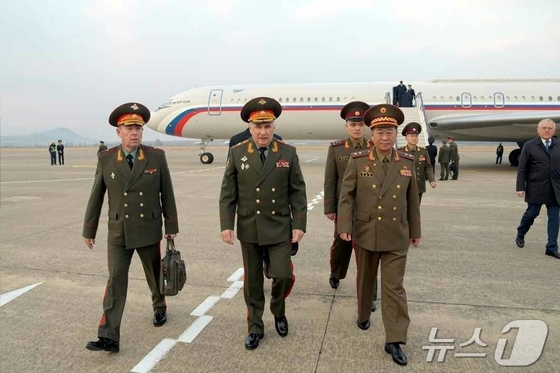
On Thursday, North Korea’s state-run newspaper Rodong Sinmun reported that a Russian delegation, led by Viktor Goremykin, Deputy Minister of Defense and head of the Main Military-Political Directorate, arrived in Pyongyang on Wednesday. The delegation was greeted by Park Yong-il, Deputy Director of the Korean People’s Army General Political Bureau, and Alexander Matsegora, the Russian ambassador to North Korea.
Upon arrival, the Russian officials paid their respects at the Liberation Tower in Pyongyang, which commemorates the Soviet army’s role in Korea’s liberation. They laid a wreath on behalf of the Russian Ministry of Defense and honored the fallen soldiers.
Given that both Russia’s Main Military-Political Directorate and North Korea’s General Political Bureau oversee ideological control within their respective militaries, analysts speculate that this meeting may have focused on crafting a narrative around the involvement of North Korean troops in the ongoing conflict in Ukraine.
The two countries have maintained robust military exchanges since signing a comprehensive strategic partnership treaty in June 2023, followed by the reported deployment of North Korean personnel to Russia in October of the same year.
In a related development last month, North Korean Defense Minister No Kwang-chol led a military delegation to Russia, meeting with his counterpart, Defense Minister Andrey Belousov. The officials attended a ceremony at Patriot Park near Moscow, unveiling a statue honoring North Korean anti-Japanese guerrilla fighters. This event served to reaffirm the strengthening ties between the two nations.
During the visit, Minister No declared that the path of our two peoples, who continuously strengthen their combat friendship and unity, will always be paved with victory and glory. Minister Belousov echoed these sentiments, characterizing the relationship between the two countries as an invincible combat camaraderie.