North Korea reacted on Tuesday to the recently released joint fact sheet on tariffs and security issued by the United States and South Korea, as well as the joint statement from the U.S.-ROK Security Consultative Meeting (SCM). Pyongyang characterized these documents as a concentrated expression of confrontational intent and said it plans to take realistic countermeasures. This response was issued four days after the publication of the fact sheet.
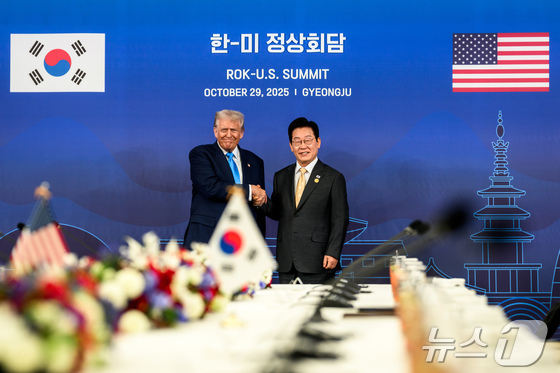
The Korean Central News Agency (KCNA) published a commentary titled “The Unchanging Hostile Declaration of the U.S.-ROK Alliance,” addressing both the joint explanatory document from the U.S.-ROK summit in Gyeongju and the joint statement from the 57th U.S.-ROK Annual Security Consultative Meeting.
According to the commentary, these joint agreements, released for the first time since leadership changes in both countries, demonstrate what North Korea views as the alliance’s persistent hostility. It asserted that the U.S.-ROK partnership is entering a potentially more dangerous phase, which could worsen regional security.
Pyongyang was particularly sensitive to the language of denuclearization. While the U.S. and South Korea reaffirmed their commitment to carrying out the 2018 Singapore Summit joint statement and emphasized denuclearization, North Korea has recently demanded that denuclearization be abandoned as a precondition for talks with Washington.
The commentary emphasized that the U.S. and South Korea’s pledge to complete denuclearization of the Democratic People’s Republic of Korea reflects an intention to undermine North Korea’s constitution and identity. It also claimed that shifting the phrasing from denuclearization of the Korean Peninsula to denuclearization of North Korea amounts to denying the country’s existence and reality.
The commentary further stated that ongoing discussions among media and analysts about the current U.S. administration’s policy on North Korea have now reached a clear conclusion. It asserted that the fact sheet confirms a previously ambiguous U.S. stance that has persisted since the early period of Trump’s second term.
The commentary noted that the United States reaffirmed its commitment to providing extended deterrence to South Korea through all available means, including nuclear capabilities. It highlighted Washington’s pledge to strengthen cooperation through the Nuclear Consultative Group and said that the primary purpose of U.S. Forces Korea is to counter North Korea.
North Korea also warned of a potential arms race, arguing that U.S. support for South Korea’s nuclear-powered submarine program would trigger a strong response. It suggested that it may bring up nuclear propulsion issues at various levels in the future.
The commentary criticized the United States for allowing South Korea to pursue nuclear-powered submarines and for permitting uranium enrichment and nuclear waste reprocessing. It claimed these measures lay the foundation for South Korea to become a quasi-nuclear state and reflect what Pyongyang described as the U.S.’s confrontational intentions.
North Korea argued that South Korea’s pursuit of nuclear-powered submarines could become a step toward developing its own nuclear weapons, which North Korea claimed would trigger a regional nuclear domino effect and intensify an arms race.
The commentary highlighted South Korea’s continued purchases of U.S. weapons and increases in defense spending, suggesting that the U.S.-ROK alliance is not the mutually beneficial relationship the two countries claim it to be. Instead, it described the alliance as a hierarchy that prioritizes U.S. interests at the expense of South Korea’s.
The regime mentioned the U.S. decision to adjust tariffs on South Korea to 15 percent, referring to it as a colonial subcontract structure. It dismissed the MASGA plan as an attempt to transform South Korean shipyards and ports into repair and supply bases for U.S. warships. These details suggest that North Korea considers the fact sheet highly significant and is closely monitoring policy coordination between Washington and Seoul.
The commentary claimed that the actions of the United States and South Korea reveal the true source of instability on the Korean Peninsula. It said these developments justify North Korea’s choice to secure peace and stability through practical measures, including maintaining its nuclear arsenal.
Pyongyang warned that in response to what it views as the formalization of the U.S.-ROK confrontational stance, it will take more justified and realistic steps to safeguard its sovereignty and security while aiming to maintain regional peace.
This commentary was issued four days after the joint fact sheet and SCM joint statement were released on Friday.
However, the message was conveyed through a KCNA commentary rather than through statements from top officials, such as Kim Yo Jong or Foreign Minister Choe Son Hui, suggesting a more moderate tone. Observers also noted the use of restrained language instead of harsh rhetoric.
Interestingly, this commentary was not published in the Rodong Sinmun, the ruling party’s newspaper, which is widely read inside North Korea.
Hong Min, a senior researcher at the Korea Institute for National Unification, described it as a cautious initial response at a relatively low level. He pointed out that while it addresses the content in detail, it maintains a restrained approach. Analysts expect close attention will be paid to North Korea’s future reactions, particularly as strategic issues such as the approval of nuclear-powered submarines and the modernization of the U.S.-ROK alliance continue to emerge.