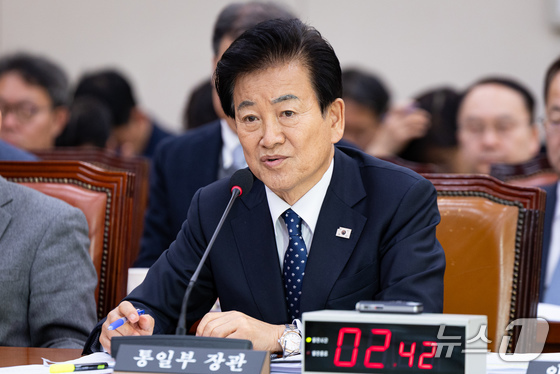
Unification Minister Chung Dong-young forecasted that North Korea would intensify its hostile two-state stance towards South Korea in the coming year.
Speaking at the 7th plenary session of the 429th National Assembly Foreign Affairs and Unification Committee on November 28, Chung responded to a query from Kim Ki-woong, a member of the ruling People Power Party, regarding North Korea’s strategic objectives for South Korea in 2026. He stated that based on current trends and indicators, it’s highly probable that North Korea will further reinforce its hostile two-state approach.
Chung added that its administration is committed to eradicating the negative legacy of political exploitation through confrontation, hostility, and hatred. It aims to usher in a new era of peaceful coexistence on the Korean Peninsula by restoring respect, recognition, reconciliation, cooperation, and dialogue.
He emphasized that a crucial step in creating the right conditions for this is the resumption of U.S.-North Korea dialogue. Chung noted that communication between the two nations has been severed for over six and a half years, stating that the realistic goal is to reestablish this connection and create opportunities for inter-Korean relations.
Chung further stressed that the crux of the matter is that the North Korean nuclear issue, along with other Korean Peninsula challenges, stems from the adversarial U.S.-North Korea relationship. The most critical task is to transform this hostile dynamic into one of dialogue and negotiation.
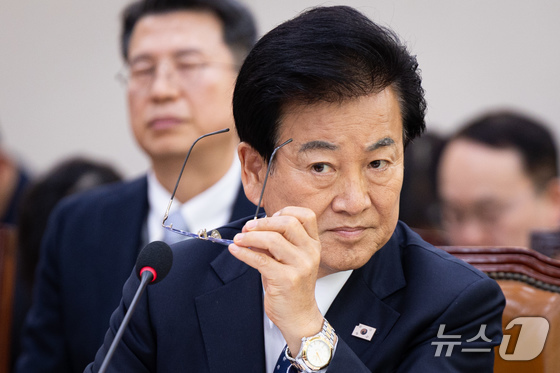
When questioned by Democratic Party lawmaker Kang Seon-woo about his statement that Korean Peninsula issues cannot be resolved with a bureaucratic mindset waiting for U.S. approval, Jeong clarified that while close cooperation and communication between South Korea and the U.S. are vital for improving inter-Korean relations, it must also take a more proactive and leading role in response to the rapidly evolving situation on the Korean Peninsula.
He continued that he was emphasizing the importance of self-determination and autonomy. It must make decisions within its capacity.
Chung elaborated that currently, it sees two Americas. One, influenced by Donald Trump’s approach, actively pursues U.S.-North Korea summits. The other, centered around the State Department, represents a more cautious bureaucratic stance. It must collaborate across all relevant departments, including the Ministry of Unification, to actively support the U.S.-North Korea dialogue that President Trump seeks. Dispatching a special envoy to North Korea could be one potential strategy.
Discussing the government’s preparations for potential U.S.-North Korea talks in light of the upcoming U.S.-China summit in April, Chung explained that being a Pacemaker means leading the way, not just following. However, realistically, without the resumption of U.S.-North Korea dialogue, it will be challenging to break the impasse in inter-Korean relations.
He pointed out that next year will mark eight years since all channels of communication between North and South Korea have been blocked. Chung advocated for proactive diplomacy with the four major powers influencing the Korean Peninsula: China, Russia, Japan, and the U.S.
Chung described the five months leading up to the April U.S.-China summit as a critical period, urging concerted efforts across all government levels to facilitate a U.S.-North Korea summit around that time.